Over the past 10+ years, we have helped many dental laboratories and dentists fabricate partial dentures. Throughout all these case communications, one question has come up far more frequently than any other: “Can you send me an image of the metal framework design for review before final fabrication?”
Rather than answering this question repeatedly through individual emails, we decided to put the answer together in this guide.
After reading, you will be familiar with the influence of support, retention, and stability on the design; the differences in daily use among acrylic, metal, flexible, and precision attachment partials; and the clinical circumstances that may be appropriate to acrylic partials, metal framework partials, flexible partials, and precision attachment partials made of PMMA, thermoplastic polyamide, cobalt chromium, titanium, or PEEK.
1. What Are Partial Dentures?
A partial denture is a removable partial denture that replaces one or more missing teeth in an arch containing at least one natural tooth. It typically consists of a base, artificial teeth, and a retaining mechanism like clasps or attachments. The base is placed on the residual ridge, and the artificial teeth are attached to it; the retention system is attached to certain natural teeth. Depending on the design, support may be provided by teeth, from mucosa, or from both.
Essentially, the partial denture replaces the missing teeth’s space. It restores occlusal contact; it aids in distributing chewing forces among the remaining teeth and supporting tissues; it aids in the prevention of drifting of the remaining teeth. It also provides support to speech and appearance when there is a loss of teeth that impacts these functions.
Here are the key benefits of partial dentures:
- Re-establishes chewing function: loss of teeth reduces the number of contacts when chewing. A partial denture replaces the missing teeth, which will enable them to eat more evenly on both sides.
- Maintains tooth position: Adjacent teeth might tilt, and opposing teeth may drift when teeth are lost. A partial denture does not allow any movement of the remaining teeth.
- Removable retention: The retention is with clasps or precision attachments, but the patient can remove it for cleaning.
- Provides flexibility in design: Depending on the case, a tooth supported, tissue supported or both types of prostheses are possible.
- Facilitates transitional care: May be used as a temporary prosthesis during the healing phase of implants or when awaiting a definitive restoration.
- Offers material and cost options: Acrylic, dental framework, flexible, and precision attachment designs provide different levels of support, esthetics, and cost.
- Supports hygiene and repair: The patient can remove it for cleaning; the laboratory can adjust, reline, and repair if needed.
- Helps with esthetic concerns: In some situations, using flexible materials and attachments with a high level of precision can reduce or eliminate the visibility of metal.
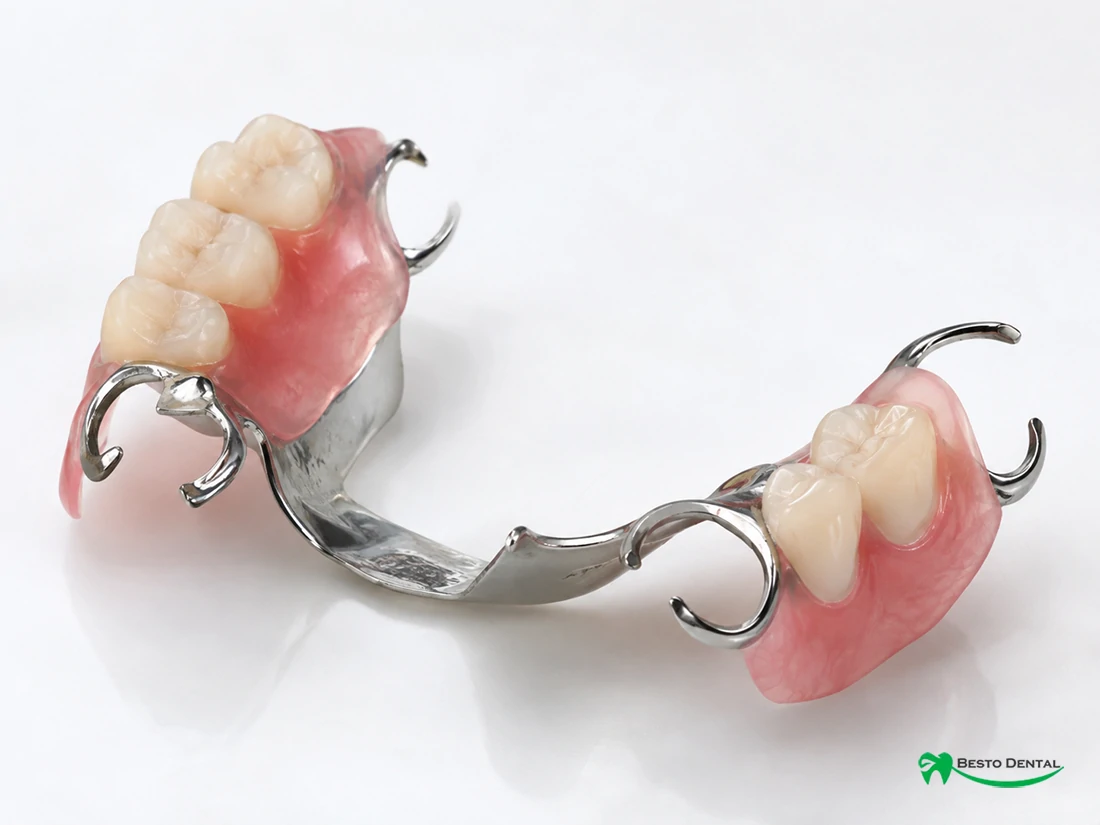
In clinical practice, partial dentures are generally worn by patients in general dental practice and prosthetic departments where one or more of their own teeth are missing, yet there is a sufficient number of teeth to support a removable prosthesis. They help to fill the empty space in the edentulous spaces, restore occlusal contacts, and, when fixed restorations are not applicable, provide a removable option. The design and the choice of material are then modified in light of the clinical situation and the laboratory requirements.
2. Materials Used in Partial Dentures
We use three parts of materials for partial dentures:
- base materials
- framework materials
- and artificial tooth materials
Base materials are usually PMMA, also called hard acrylic resin, for standard acrylic partials, or thermoplastic polyamide for flexible denture such as Valplast type. Framework materials are commonly cobalt-chromium alloy, pure titanium or titanium alloy, and occasionally PEEK. Artificial teeth are usually prefabricated acrylic teeth from brands such as Ivoclar and Yamahachi.
| Material | Main Characteristics | Common Considerations |
|---|---|---|
| PMMA, base material | Rigid, easy to adjust and repair, good color stability, common for acrylic partial bases | Can fracture under high stress; needs sufficient thickness; may feel bulkier |
| Thermoplastic polyamide, base material | Flexible, lightweight, metal free appearance, often used for flexible partial bases | Not the same as PMMA; limited adjustability after processing; not ideal for every case |
| Cobalt chromium alloy, framework material | High rigidity, good strength, relatively low cost, common for metal frameworks | Heavier than titanium; casting and finishing require experience; chairside adjustment can be difficult |
| Pure titanium and titanium alloy, framework material | Lightweight, excellent biocompatibility, corrosion resistant | Higher material cost; more demanding to cast and finish |
| PEEK, framework material | Lightweight, biocompatible, rigid with some flexibility | Less common than metal alloys; higher cost; long term clinical data still limited |
| Prefabricated acrylic teeth, artificial teeth | Natural appearance, range of shades and molds, good wear resistance | Bonding to base must be reliable; shade and mold selection affect esthetics and occlusion |
First, PMMA and thermoplastic polyamide are often confused, but they are different. PMMA is a hard acrylic resin used for standard acrylic partial denture bases. Valplast-type partials are made of a flexible thermoplastic polyamide. They differ in flexibility, fit, adjustment, repair, and patient comfort. If you would also like to learn more about Valplast partial dentures, we have written a dedicated guide: Flexible Denture Guide.
Cobalt-chromium and titanium are both used for metal frameworks. Cobalt-chromium is more rigid and less expensive. Titanium is lighter, more biocompatible, and more expensive but harder to process. If your budget is limited, you might consider using cobalt-chrome framework. PEEK is another, less common alternative to metal alloys.

3. Types of Partial Dentures
Partial dentures are most often classified by structure and retention method. We consider this the most practical way to separate them because it directly affects support, esthetics, and laboratory workflow.
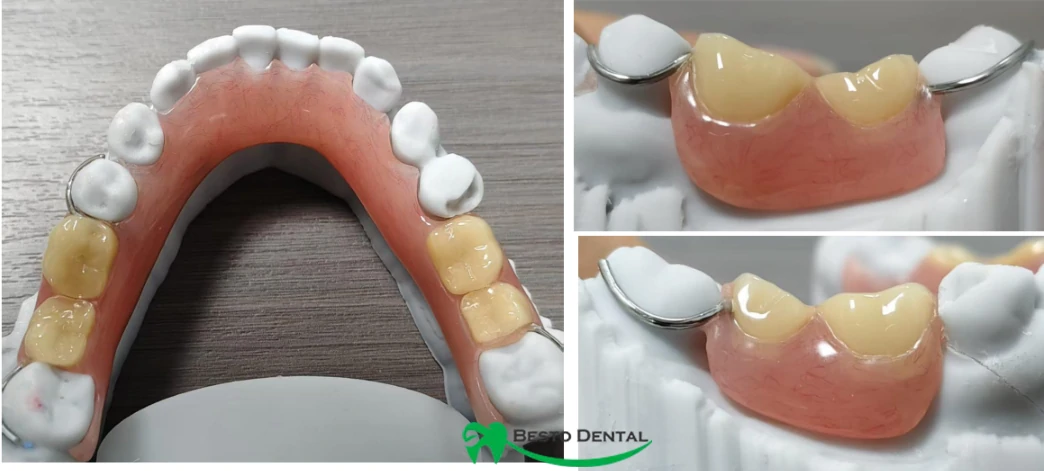
1) Acrylic Partial Dentures
An acrylic partial denture is made up of an acrylic base, artificial teeth, and clasps. Clasps may be cold-bent wire, cast, circumferential, or bar clasps. This is the most basic and inexpensive type. It can be utilized as a temporary or transition prosthesis, or it can be a definitive prosthesis when the case is simple. Before production, it is important to discuss with the patient whether they wish to wear clasps and, if they do not, an alternative can be chosen according to the individual case. For example, Valpast partial dentures.
2) Metal Framework Partial Dentures
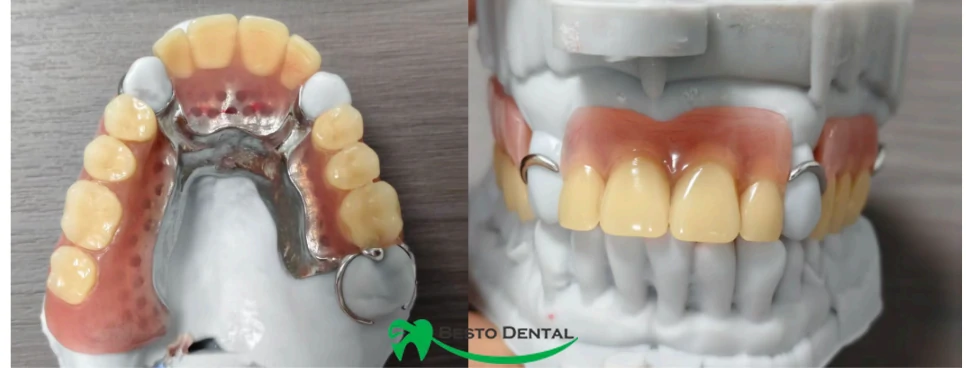
Partial Dentures with a metal framework are those that are made with a cast metal framework and acrylic base and artificial teeth. Typically constructed of cobalt-chromium alloy or pure titanium. Titanium is more costly, but is lighter and more biocompatible. This type offers more rigidity, support, and stability than an all-acrylic partial, particularly when used in a distal extension situation.
3) Flexible Partial Dentures
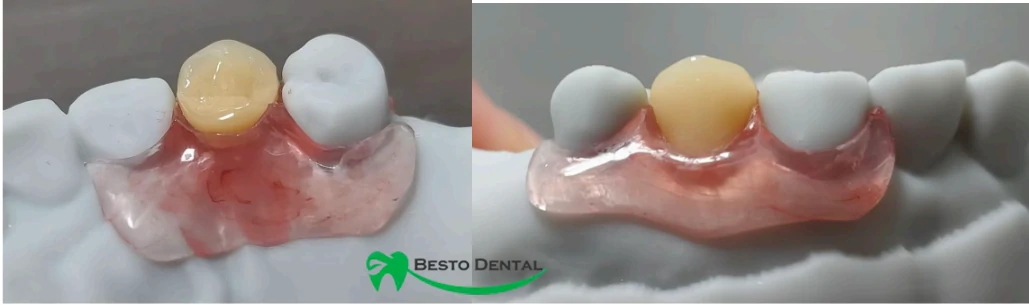
Flexible partial dentures use a thermoplastic polyamide material for the base. The base has some flexibility, and the clasps are made from the same tooth colored or gum colored material, which engages undercuts on the abutment teeth for retention. There is no visible metal clasp. These are often chosen for esthetic reasons, particularly in the anterior region. More detailed information on flexible partial dentures is covered in our separate guide on flexible denture .
4) Precision Attachment Partial Dentures
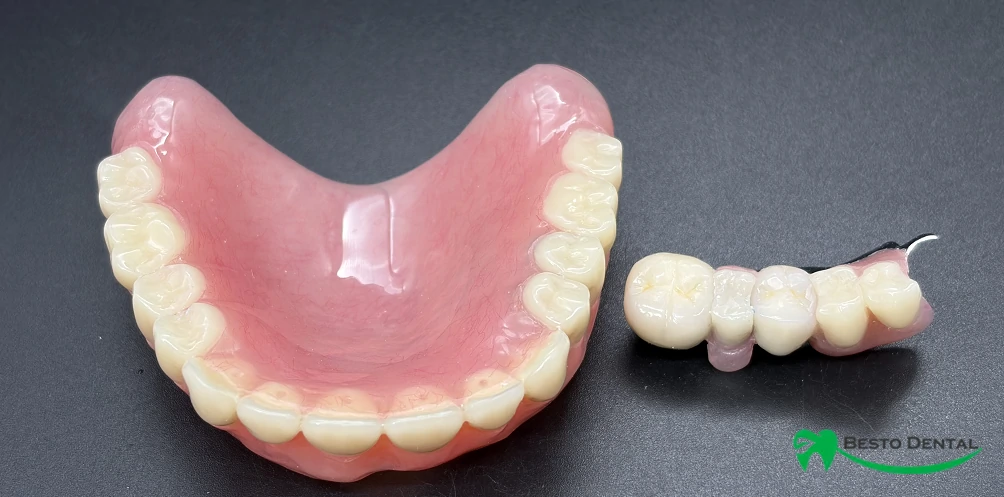
A precision attachment partial denture consists of a crown, an abutment, and a removable prosthesis. The attachment can be a Ball Attachment, Bar and Clip, Magnetic Attachment, or telescopic crown. These cases require higher precision in laboratory fabrication and take longer to produce, approximately 10 to 15 days. So please take this into account when scheduling patient appointments.
In addition, when selecting magnetic attachments, the lab will usually provide you with several brands or models to choose from based on the specific case. It is not recommended to choose lower-quality attachments simply to reduce costs. Different products may vary in magnetic retention, stability, and durability, and the initial savings on attachment costs may lead to insufficient retention, additional adjustments, or even remakes later.
If you are not familiar with the different brands, it is best to ask the laboratory for their recommendation. Laboratories usually have experience with many similar cases and are familiar with the actual performance and suitability of different magnetic attachments, allowing them to recommend a more appropriate option for your specific case.
| Type | Main Characteristics | What to Keep in Mind |
|---|---|---|
| Acrylic partial | Simple, economical, easy to adjust | Less durable; clasps may be visible; not ideal for long span cases |
| Metal framework partial | Rigid framework, good support and stability | Higher cost than acrylic; metal clasps may be visible; design must be precise |
| Flexible partial | No visible metal clasps, flexible base, esthetic | Limited adjustability; not suitable for all cases; material differs from acrylic |
| Precision attachment partial | No visible clasps, excellent retention and esthetics | High precision required; longer production time; higher cost |
In the cases we handle, acrylic and metal framework partials are the most commonly requested.
4. Partial Denture Design
The design of a partial denture must be a compromise between these factors: support, retention, stability, esthetic appeal, and health of remaining teeth and tissues.
| Design Principle | Core Requirement | Practical Considerations |
|---|---|---|
| Support | The prosthesis must rest on stable oral structures. | In tooth-supported partials, rests sit on prepared rest seats and transfer vertical forces to the abutment teeth. In tooth-tissue supported partials, such as distal extension cases, the base also rests on the mucosa and shares the load between teeth and soft tissue. |
| Retention | The prosthesis should withstand forces that tend to make it fall out. | Done by using clasps that fit undercuts on abutment teeth, or by precision attachments that provide mechanical retention of the prosthesis. The shape and position of the abutments and the periodontal health are critical to direct and indirect retainers. |
| Stability | The prosthesis must not move or roll around while chewing or talking. | Rigid frame, rests, and clasp assembly to prevent movement in several directions. Cross-arch stabilization can also be beneficial. |
| Esthetics | Visible metal should be minimized, especially in the anterior region. | May use flexible materials, precision attachments, or careful clasp positioning to make them less noticeable. |
| Path of insertion | The prosthesis must seat onto the abutment teeth along a clear path. | A survey helps identify undercuts, guiding planes, and rest seats. A clear path makes the prosthesis easier to seat and more comfortable for the patient. |
| Major connector | The major connector links components and distributes forces. | It should be rigid, comfortable, and designed to avoid impinging on gingival tissue. The selection is based on the patient’s arch, the number and position of the missing teeth, and the condition of the remaining teeth. |
| Occlusal considerations | Artificial teeth must meet opposing teeth properly. | Check the occlusal relationship to avoid interference and maintain the vertical dimension. A design drawing and a survey are used to ensure a plan is accurate in complex cases. |
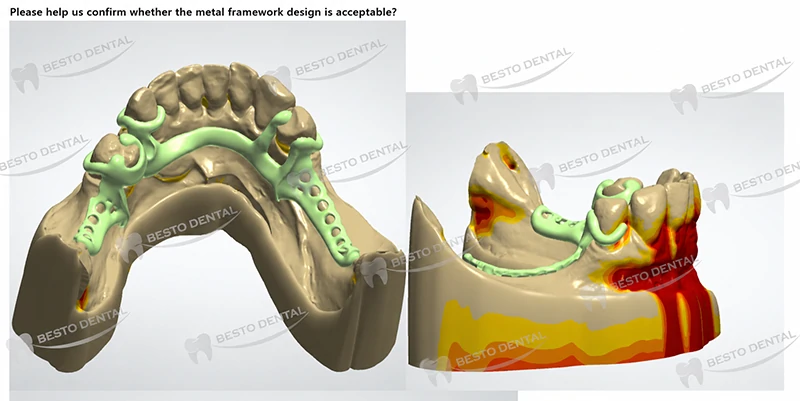
At BestoDental, if you are working with us for the first time and would like to make sure the metal framework design meets your expectations, you can ask us to send you the partial denture framework design for review before fabrication. Once you have reviewed and approved the design, we will proceed with production.
During this initial adjustment period, we will carefully record your preferences for each case. Once we become familiar with your requirements and working preferences, there will be no need for you to spend time reviewing every framework design before fabrication.
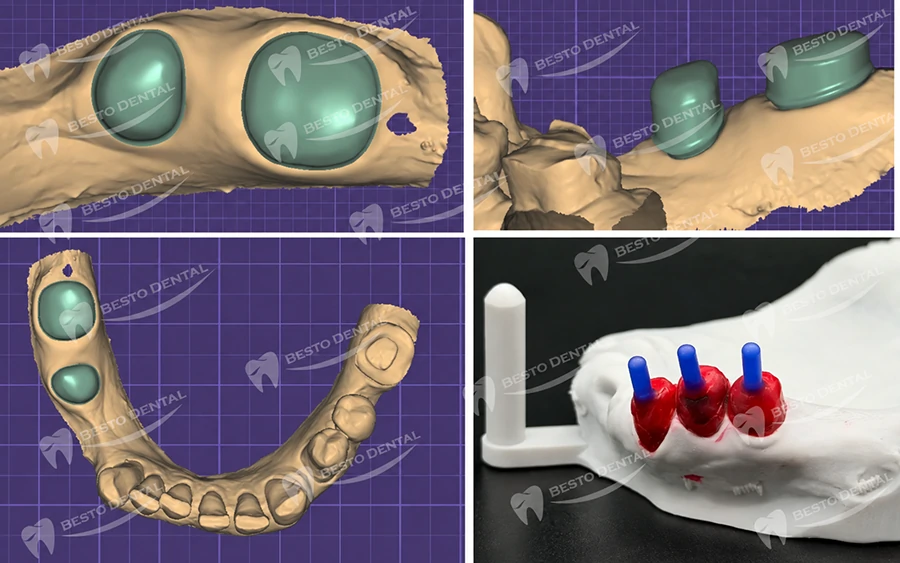
Additionally, because precision attachment partial dentures are more complex, BestoDental will also prepare a design drawing for your review before fabrication, allowing you to confirm key parameters such as the path of insertion, attachment type, and space requirements before we proceed with production.
5. Clinical Applications of Partial Dentures
Partial dentures are most often used in cases where one or more teeth are missing and there are sufficient natural teeth to retain a removable denture. This depends on the location and the number of missing teeth, the condition of the teeth adjacent to the missing teeth, and esthetic and functional needs of the patient.
| Specific Clinical Situation | How the Product Is Used | Main Considerations |
|---|---|---|
| Single missing tooth in the anterior region | A partial denture with one artificial tooth replaces the missing tooth and restores esthetics | Clasp visibility and shade matching are important; flexible or precision attachment designs may be considered |
| Multiple missing teeth in the posterior region | A partial denture with several artificial teeth restores chewing function on the affected side | Support and stability are key; a metal framework is often chosen for rigidity |
| Distal extension with no posterior abutment | A tooth tissue supported partial denture replaces the missing posterior teeth | The base shares the load with the mucosa; design must limit torque on the abutment teeth |
| Bounded edentulous area with healthy abutments on both sides | A tooth supported partial denture uses rests and clasps on the abutments | Abutment teeth must support the extra load; periodontal health should be evaluated |
| Transitional case before implant placement | A partial denture serves as a temporary prosthesis while implants heal | The design should be simple and easy to adjust; it will be replaced after implant restoration |
| Patient with metal sensitivity | A metal free partial, such as a flexible partial, avoids metal exposure | Material compatibility and long term durability should be considered |
| Anterior missing teeth with a high smile line | A flexible partial or precision attachment partial reduces visible clasps | The design must balance esthetics with retention and support |
| Long span edentulous area | A metal framework partial provides rigidity and distributes forces across multiple teeth | Framework design and major connector selection are critical |
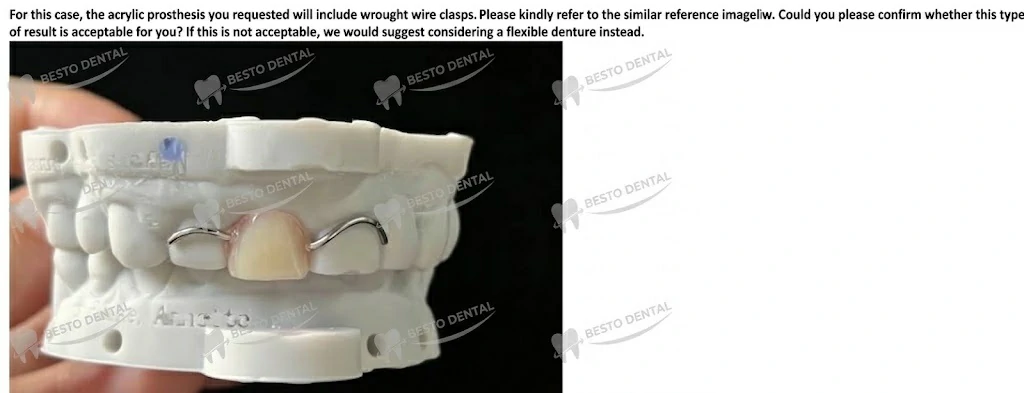
In the high smile anterior case. In this instance, the patient might not want to have the clasps visible. A flexible partial or precision attachment partial can be used, but there are limits to both. The flexible partial is more difficult to adjust, but does not require metal clasps.
A precision attachment partial will offer good esthetic and retention features but takes more time to manufacture, must be crowned and positioned correctly on the abutments. The selection of the final choice is dependent upon the condition of abutment teeth, space available, patient priorities, and clinical prognosis. BestoDental will confirm with the client before production.
6. Partial Denture FAQs
BestoDental has fabricated tens of thousands of partial dentures of various types. Through this extensive experience, we have gained a clear understanding of the questions dental laboratories and dentists commonly ask when discussing partial denture cases. To address these questions, we have compiled some of the most frequently asked questions below for your reference.
1) What Information Should I Provide When Ordering a Cast Partial Denture?
Please send us the upper and lower scans or impressions, bite record, teeth to be replaced, and tooth shade. If you have specific requirements for the major connector, clasps, rests, framework design, or areas where you want to avoid visible metal, please include them in the case instructions. The more clearly these details are provided, the easier it is for labs to follow your preferred design.
2) Can You Make a Cast Partial Denture with Valplast or Flexible Clasps?
Yes. A metal framework can be combined with Valplast or other flexible components when the case is suitable. This is often considered when you want the support and stability of a metal framework but would prefer less visible metal in certain areas. Just let labs know your requirements when submitting the case.
3) Can the Metal Clasps Be Hidden or Replaced with Esthetic Clasps?
Yes, in many cases labs can adjust the clasp design or use a more esthetic option, such as a flexible clasp, to reduce visible metal. However, the final design still needs to provide enough retention and support, so lab will review the case before confirming the best option.
4) Do All Cast Partial Dentures Require a Framework Try-In?
Not necessarily. For straightforward cases with clear records and design requirements, labs can proceed directly to the next stage or completion if customers prefer. For more complex cases, or if you want to check the fit and design first, we recommend a framework try-in before proceeding with the tooth setup and final processing.
5) Can Teeth Be Added to an Existing Partial Denture Later?
In many cases, yes, but it depends on the existing denture design, framework, base material, and the location of the new missing teeth. Acrylic areas are generally easier to modify, while some metal framework or flexible partial dentures can be more difficult to alter. You can send labs photos, scans, or the existing denture for evaluation before deciding whether an addition or a remake is more suitable.
7. Conclusion
Partial dentures provide a practical solution for restoring missing teeth while preserving the remaining natural dentition. This guide has covered the main materials used in partial dentures, common types such as acrylic, flexible, and cast partial dentures, as well as the key principles that influence partial denture design and their clinical applications.
By understanding how materials, framework components, retention methods, and different denture types affect function and treatment, you can better determine which partial denture solution may be appropriate for a specific case. You should also have a clearer understanding of what information to provide your dental laboratory, when framework or try-in confirmation may be useful, and how design requirements can be communicated before fabrication.