For many dentists and dental clinics, finding a new dental laboratory is not difficult. The real challenge is knowing where to begin. If you simply search for “dental lab,” you will find countless options. Every laboratory highlights its quality, pricing, turnaround time, and customer service. However, these claims do not tell you what you really need to know: how to place your first outsourced case, which type of case to start with, what details should be confirmed before submission, and how to evaluate whether a laboratory is suitable for a long-term partnership after receiving the first case.
Drawing on BestoDental‘s years of experience serving dentists and dental laboratories worldwide, this article will walk you through the entire outsourcing process step by step. Before reading this guide, we strongly recommend starting with our related article: Dental Lab Outsourcing Guide: Price, Workflow, and What To Expect. It will give you a clear overview of dental lab outsourcing costs, workflow, and common expectations.
Once you have a basic understanding of how dental lab outsourcing works and are ready to begin your outsourcing journey, this article will guide you through the next step. You’ll learn how to find the right dental laboratory and safely complete your first trial case with confidence. Whatever you are a novice to outsourcing, are seeking a backup lab, or perhaps you are considering outsourcing to an international dental lab.
1. Decide Which Cases You Want to Outsource First
Dental restorations and appliances come in various forms such as fixed, removable, implant, and orthodontic. However, not every dental laboratory specializes in the same areas. Some laboratories excel in fixed restorations such as zirconia crowns, E.max restorations, and PFM crowns. Others have more extensive experience with removable dentures, while certain laboratories are better equipped to handle implant abutments, implant-supported bridges, surgical guides, or full-mouth rehabilitation cases.
Of course, virtually all types of dental products can be outsourced. If your practice requires them, zirconia crowns, veneers, inlays, onlays, removable dentures, clear retainers, implant crowns, custom abutments, surgical guides, and many other restorations can all be fabricated by an external dental laboratory.
However, if working with a new laboratory for the first time, we do not recommend sending highly complex cases immediately.
A safer and more practical solution is to begin with a few of the easy, low-risk, standardized cases that fit a specific workflow, such as:
- Single-unit zirconia crowns
- PFM crowns
- E.max crowns
- E.max veneers
- Simple inlays and onlays
- Single temporary crowns
- Simple retainers
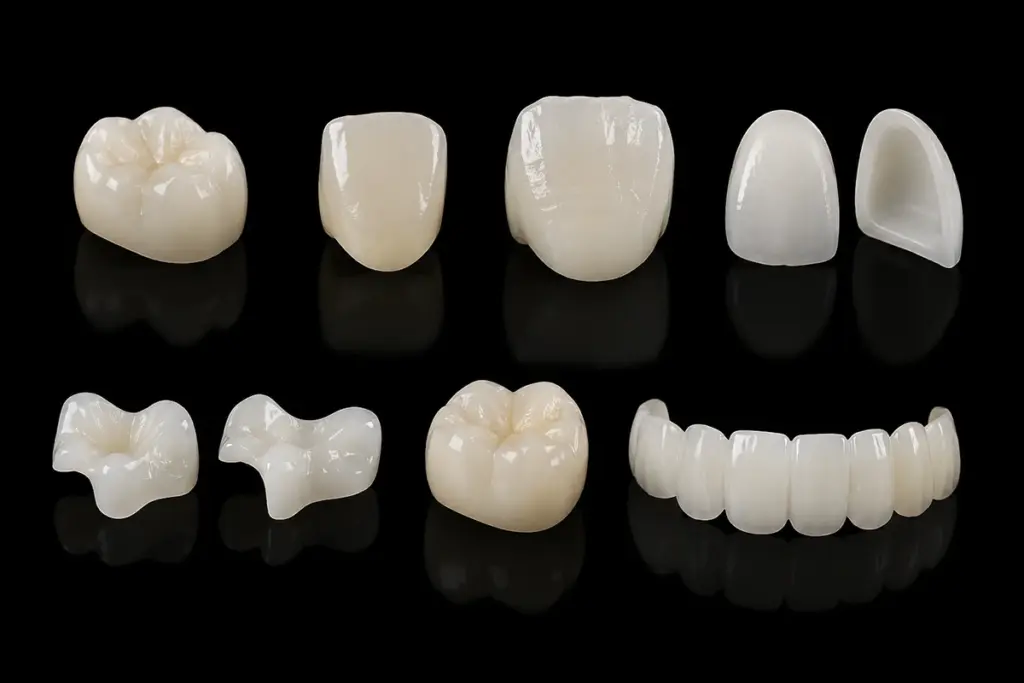
These types of cases offer a straightforward way to evaluate a laboratory’s fundamental capabilities. Dentists can more easily assess key factors such as marginal fit, proximal contacts, occlusal design, shade matching, communication efficiency, and turnaround-time consistency.
The goal of a first trial order is not to immediately establish a long-term partnership. Rather, it is an opportunity to determine whether the laboratory is genuinely a good fit for your practice.
When the collaboration is successful, more complex scenarios can be introduced, such as removable dentures, implant crowns, custom abutments, implant-supported bridges, surgical guides, full-mouth rehabilitation cases, and All-on-X cases. This will minimize the dangers of an original collaboration and offer the lab a way to get to know your workflow needs and clinical tastes over time.
In short, first identify the types of cases you plan to outsource, then evaluate the laboratory with a small number of straightforward cases before gradually expanding the scope of cooperation. This strategy is far safer and more effective than sending complex cases from the very beginning.
2. Finding Potential Dental Labs
Once you have decided which products to use for your trial order, the next step is to start looking for potential laboratory partners. The question is: where should you find them?
1) Search dental lab on Google
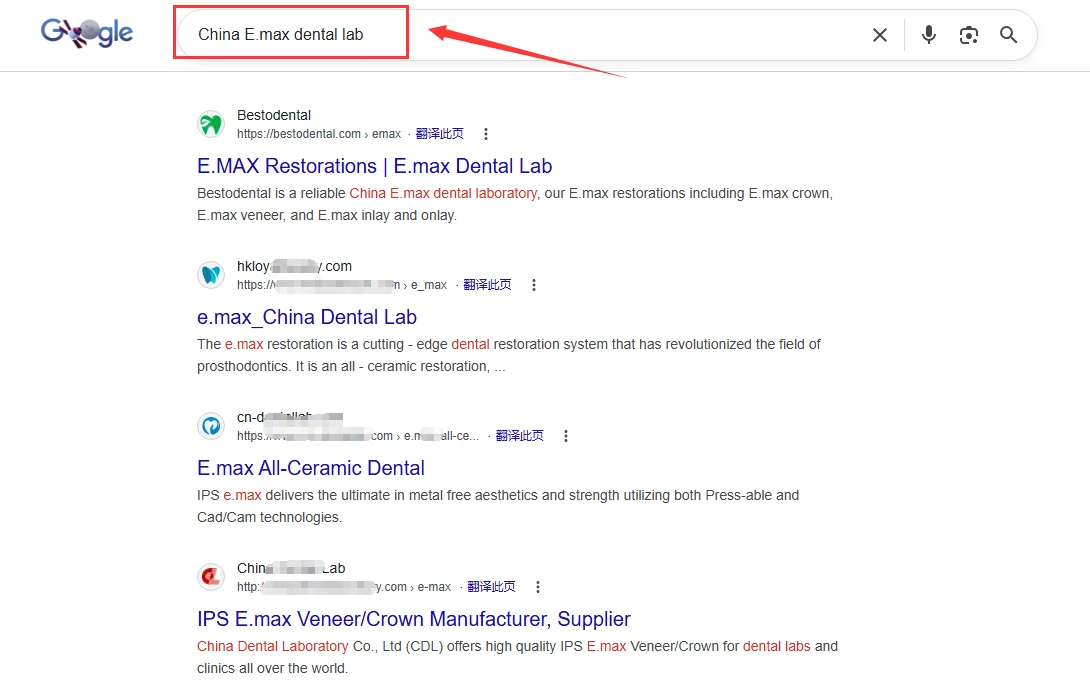
Google remains the most direct and commonly used way to find a dental laboratory. However, many people simply search for “Dental Lab,” which often returns overly broad results. It’s best to identify the specific product they are outsourcing. For geographical preferences, you can also include a country/region in the search terms.
For example:
Fixed Restorations
- Zirconia Crown Dental Lab China
- E.max Dental Lab India
- Veneer Dental Lab Vietnam
- Crown and Bridge Dental Lab
Implant Restorations
- Implant Dental Lab
- Custom Abutment Dental Lab
- Surgical Guide Dental Lab
- Full Arch Dental Lab
Removable Prosthetics
- Denture Dental Lab
- Removable Dental Lab
- Flexible Partial Denture Lab
Orthodontics
- Herbst Dental Lab
- Sport Guard Dental Lab
- Hawley Retainer Dental Lab
Digital Dentistry
- Digital Dental Lab
- CAD CAM Dental Lab
To help dental professionals find suitable denture suppliers more efficiently, we have organized a dental laboratory directory covering multiple countries and regions. You can use this global dental lab list to quickly explore suppliers in your target outsourcing country and compare potential partners. Visit and check the list of dental labs
After identifying potential laboratories, do not rush into requesting quotations. Instead, spend a few minutes reviewing their websites. Pay particular attention to the following:
- Whether they provide comprehensive product information
- Whether they showcase real case photos
- Whether they explain their digital workflow
- Whether clear contact information is available
- Whether there are signs of long-term business operations and industry experience
When a site has only a few simple pages and there are no real examples or contact information, be sure to carefully check out the laboratory before pursuing any collaboration.
2) Ask for Peer Recommendations
When developing program policies and services, ask other peers for their recommendations. While Google is the quickest means to locate a dental lab, it is best to rely on word of mouth. There are a lot of great labs that don’t have a great website, but they may be supplying quite a few dentists in a specific area and for a long time. If you do have trusted colleagues in your network, ask them about the labs they currently work with.
However, instead of simply asking, “Which lab do you use?”, it is often more valuable to ask questions such as:
- How long have you been working with this lab?
- Is the remake rate high?
- Are the turnaround times consistent and reliable?
- How quickly do they handle problems when they arise?
- Is communication smooth and efficient?
These real-world experiences often provide far more useful insights than a laboratory’s own marketing materials or promotional claims.
3) Explore Dental Communities and Forums
In addition to search engines and peer recommendations, don’t overlook dental communities and professional forums. Many dentists actively share their real-world experiences working with dental laboratories on these platforms. Popular examples include:
- Dentaltown
- Reddit Dentistry Communities
- Facebook Dental Groups
- Local Dental Associations
Within these communities, you can often find discussions about:
- Dental Lab Recommendations
- Outsourcing Experiences
- Laboratory Reviews
- Remake Discussions
Compared with information published by laboratories themselves, feedback from actual users is often more candid and trustworthy. Of course, every practice has different needs, so you should not blindly follow someone else’s choice. However, these discussions can help you quickly develop an initial understanding of different laboratories and narrow down your options more efficiently.
4) Check Your Scanner Network
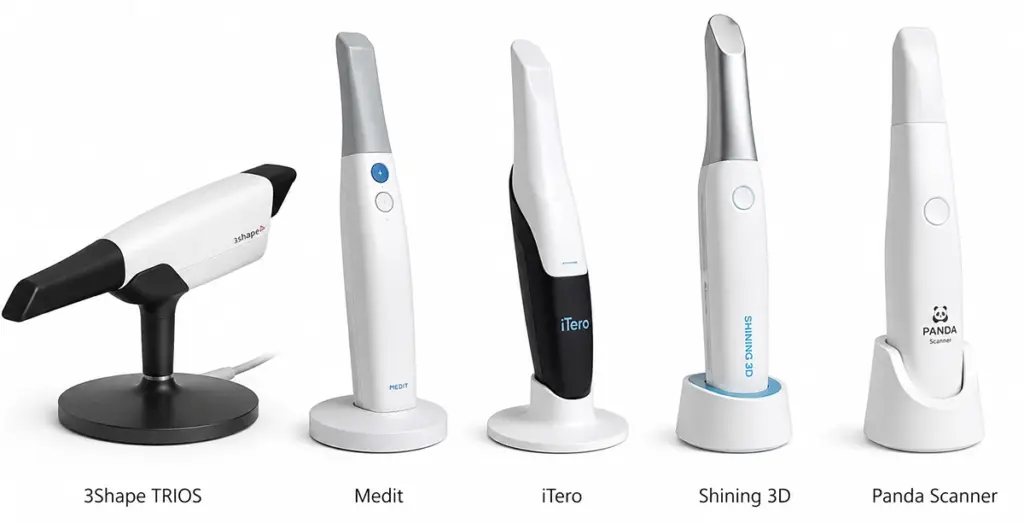
For digital dental practices, this may be one of the most easily overlooked methods. If you are already using an intraoral scanner, such as:
- 3Shape TRIOS
- Medit
- iTero
- Shining 3D
- Panda Scanner
many scanner systems already have their own laboratory connection networks. Some dental labs may even be directly integrated with these systems. This means file transfer can be easier, and data compatibility is often better.
Therefore, when looking for a dental laboratory, it is worth giving priority to labs that already support your scanning system. This can help you avoid many unnecessary problems later in the workflow.
5) Ask Suppliers and Equipment Providers
Many dentists may not realize that dental equipment and material suppliers often have access to a wide range of industry resources. For example:
- Intraoral scanner suppliers
- Implant system suppliers
- CAD/CAM equipment suppliers
These suppliers usually work with many dental laboratory clients. If your practice mainly focuses on implant restorations, you may ask your implant system supplier for suggestions. If you mainly use a digital workflow, you can also ask your scanner supplier about laboratory resources they have worked with for a long time.
Although these recommendations may not always be official endorsements, they can still provide useful reference points.
The channels above are some of the most common ways to find potential dental laboratories. After screening through these methods, you can usually build a shortlist of 3–5 candidate labs. From there, you can proceed to the next step: reaching out to the laboratories and requesting the necessary information that you need to know before entering a cooperation.
3. Contact Dental Labs and Request Key Information
Before sending a trial case, many dentists or dental laboratories will naturally start by asking, “Can you send me your price list?” There is nothing wrong with this. A price list is important for understanding cooperation costs and is something you should review before outsourcing cases.
However, in real communication, if the first email only says, “Please send me your price list,” it may not always receive the best response. The reason is simple: many laboratories receive a large number of inquiries every day. Some may come from competitors checking prices, while others may not have a real intention to cooperate. As a result, if the inquiry is too brief, the lab may not treat it as a priority, or may only provide a very general reply.
Based on BestoDental’s experience serving overseas dentists and dental laboratory clients, a high-response inquiry email should do more than simply ask for pricing. It is better to briefly introduce your cooperation background and needs first. For example, you can mention:
- Whether you are a dental clinic, dental laboratory, or distributor
- Your country or main market
- Your approximate monthly case volume
- The main products you want to outsource, such as fixed restorations, zirconia crowns.
- Whether you use digital intraoral scan files or traditional models/impressions
- Whether you have previous experience working with overseas laboratories
- If yes, which country or region your previous laboratory partners were mainly from
- Other information you need to understand before cooperation, such as turnaround time, remake policy, payment methods, and shipping arrangements
These details are not complicated, but they help the laboratory quickly determine whether your needs are a good match. They also make it more likely that the lab will take your inquiry seriously. From the laboratory’s perspective, a complete inquiry usually indicates a clearer intention to cooperate. It also allows the lab to provide a more accurate price list, turnaround time explanation, and cooperation suggestions based on your product types, case volume, and market location.
To help you start your first inquiry more easily, BestoDental has prepared a simple and practical inquiry email template. This template is closer to a real cooperation scenario. Instead of only asking for a price list, it can help you receive a more detailed and higher-quality reply.
Dear BeatoDental,
We are a dental laboratory based in the United Kingdom.
We are currently looking for an overseas dental laboratory partner who can help us handle part of our outsourced dental work. Our cases cover a full range of dental restorations, with an average monthly volume of around 100 cases.
We prefer to use STL files and digital model transmission for case submission. At present, we have not cooperated with any overseas dental laboratories yet, and we would like to learn more about your lab.
Could you please provide us with the following information:
- Price list
- Turnaround time
- Shipping options and delivery time to London, UK
We look forward to your reply.
Best regards,
[Your Name]
4. Send Your First Trial Case
Once you have a basic understanding of a laboratory’s pricing, turnaround time, and workflow, you can start preparing your first trial case.
Sending a trial case is not simply a matter of forwarding intraoral scan files, bite registrations, or physical models. To ensure the laboratory fully understands your expectations, you should also provide clear case instructions. From a laboratory’s perspective, the more complete the information is, the lower the risk of misunderstandings, repeated confirmations, and remakes.
A clear trial case submission should typically include:
- Patient name
- Restoration tooth position
- Restoration type, such as E.max crown, zirconia crown, PFM crown, E.max veneer, etc.
- Shade
- Any special instructions or characterization requirements
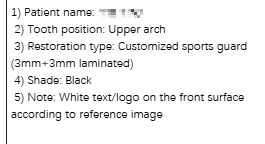
For example, if you are sending an E.max veneer case, it is helpful to specify not only the tooth position and shade, but also whether patient photos should be used as a reference, whether there are specific translucency requirements, whether the original tooth shape should be maintained, and whether any special surface texture or incisal effects are desired. If you would like to learn more about outsourcing E.max restorations, please refer to: E.max Dental Lab Outsourcing Guide: Price, Workflow & Lab Selection.
For zirconia crown cases: Consider if multilayer zirconia is desired, if there is a need for lighter occlusion, if there are proximal contact requirements for a slightly tighter fit, and if there are any special occlusal requirements. If you would like to learn more about outsourcing zirconia restorations, please refer to: Zirconia Dental Lab Outsourcing Guide: Price, Workflow & Lab Selection.
The information for an implant case tends to be more detailed. Common information includes the implant system, platform parameters, scanbody information, preferred design (screw-retained/cement-retained) and if a custom abutment is needed. If you would like to learn more about outsourcing implant restorations, please refer to: Dental Implant Restoration Outsourcing Guide: Price, Workflow & Lab Selection.
Based on BestoDental’s experience, many case issues are not caused by the laboratory’s inability to fabricate the restoration, but rather by incomplete information provided at the beginning. Missing shade information, unclear tooth positions, unconfirmed margin lines, insufficient occlusal records, or special requirements that were not communicated in advance can all increase communication time and create avoidable complications.
For this reason, it is often beneficial to provide more detailed instructions than usual when sending your first trial case.
This will assist the lab to better understand what you expect of them and help you assess the lab’s operation. Do they carefully read prescriptions, for instance? Do they proactively confirm unclear details? Do they communicate effectively throughout the process?
For a digital workflow, there are systems like 3Shape, Medit, Shining 3D, etc. that can be used to transfer files. In a traditional workflow, it is important to verify the laboratory’s shipping address, their package needs, and their logistics arrangements before the shipment.
After submitting the case, it is recommended to ask the laboratory to confirm three key points:
- Whether all required case information has been received and is complete.
- Whether the case can be fabricated according to your instructions.
- The estimated completion date and shipping date.
In this way, your first trial case becomes more than just a product evaluation—it becomes a complete test of the laboratory’s communication, workflow, and service capabilities.
5. Review Final Check Photos Before Shipment
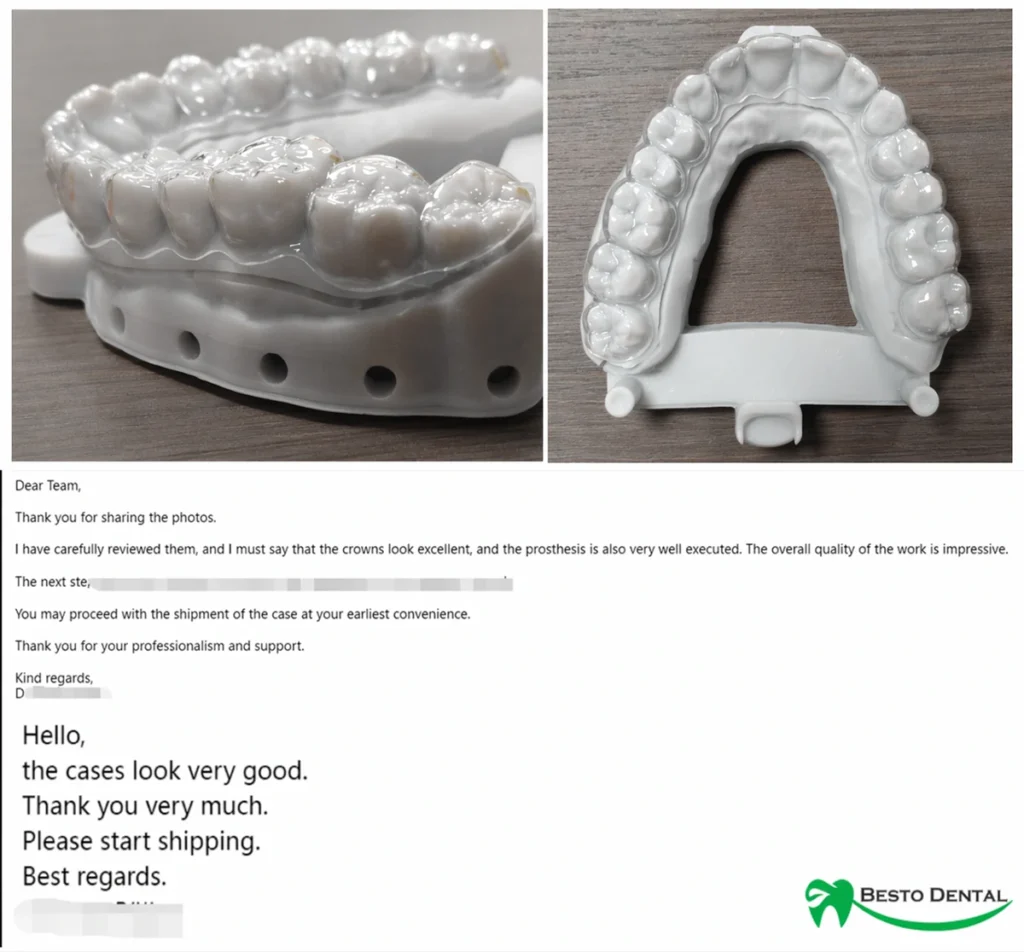
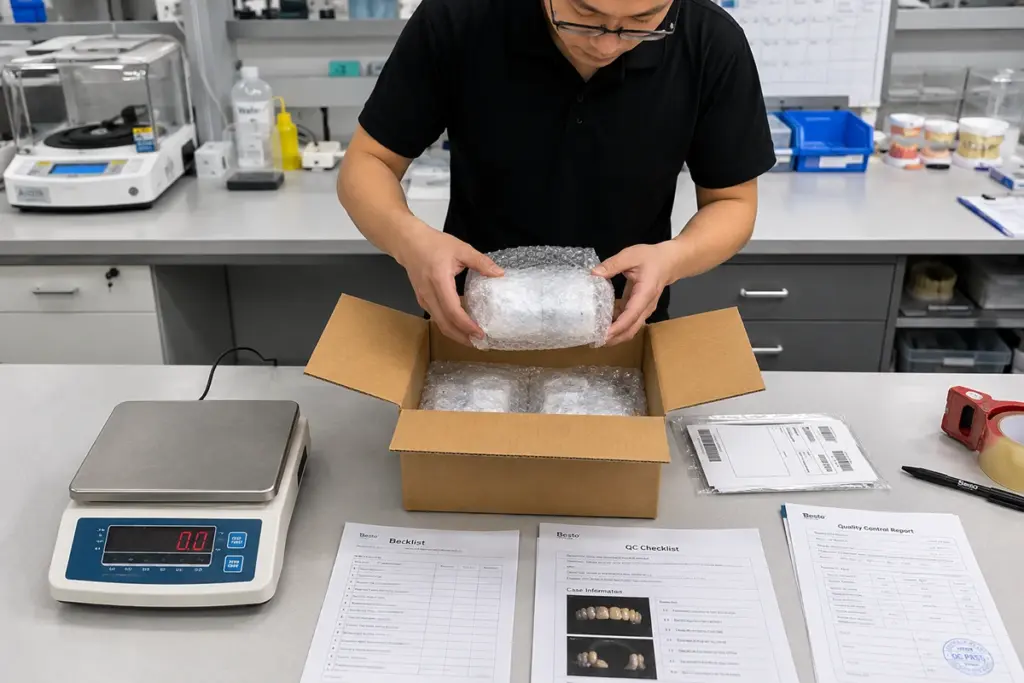
Some dental laboratories with a more complete service workflow will provide final check photos before shipment for the client to review. At BestoDental, for example, after a case is completed and passes our internal quality inspection, we take final check photos and send them to the client for confirmation. This has always been one of the workflow steps we take very seriously.
Through pre-shipment final check photos, you can review the basic condition of the restoration in advance, such as tooth position, shape, shade, surface effects, and whether any special requirements have been followed. Although photos cannot fully replace clinical try-in, they can help you identify obvious issues before shipment and reduce unnecessary shipping time, communication costs, and potential remake risks.
In real cooperation, many clients also appreciate this process because it makes the entire outsourcing workflow more transparent and adds one more layer of confirmation before the case is shipped.
6. Evaluate the First Trial Case After Delivery
After receiving the physical trial case, you can further evaluate the actual performance of the restoration. This step mainly focuses on two aspects:
- First, whether the product itself meets clinical requirements.
- Second, whether the overall cooperation process feels smooth and controllable.
In terms of the product itself, you can focus on checking the margin fit, proximal contacts, occlusion, try-in fit, shade match, anatomical design, and patient feedback.
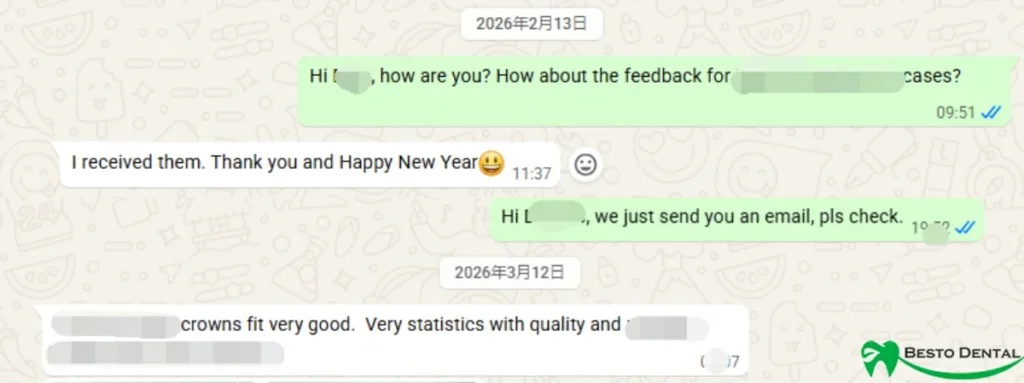
In terms of the cooperation process, you should review the entire trial case experience. For example, did the laboratory complete the case on time? Did they proactively send final check photos? Did they respond to questions promptly? Were they willing to make adjustments based on feedback? Was the overall timeline within a controllable range? Did they communicate actively when problems occurred?
The first trial case is not only to find out if the product can be completed but also if the laboratory has the stability necessary for continued cooperation. A lab that can communicate clearly, perform pre-shipment quality control, return speedy feedback and ensure consistent delivery during the trial period will most likely be a long term partner that you want to continue working with.
7. How to Find the Right Dental Lab for Outsourcing FAQs
The following are some of the most common questions dentists and dental laboratories ask when considering dental lab outsourcing.
1) What Are the Signs of a Bad Dental Lab?
Not every issue will be present in the initial cooperation, but there are some indicators that should be closely monitored.
Examples of this vary from constantly slow responses, to constantly delayed turnarounds, to no pricing system, no photos of real cases, vague answers to technical questions, or a tendency to pass the buck when there’s a problem.
A good laboratory does not necessarily promise that everything can be done. It should, however, be able to make it perfectly clear to you what can be done, what should be taken up for further evaluation, and what potential risks may exist.
2) What Are the Most Common Mistakes When Choosing a Dental Lab?
The most common mistake is comparing only the price.
In reality, working with a dental laboratory is a long-term investment. If choosing the lowest price leads to a higher remake rate, lower communication efficiency, or unstable turnaround times, the final cost in terms of time and patient management may be much higher than the amount saved.
Another common mistake is sending a large number of complex cases at the very beginning. It is better to begin with some simple trial cases first. If cooperation is running smoothly, you can ramp up the number of cases and work your way up to more complicated cases.
3) How Many Trial Cases Should I Send to a New Dental Lab?
Based on our experience, it is usually recommended to keep the first trial order to 1–3 cases.
If the number is too small, it may be difficult to fully understand the laboratory’s actual capabilities. If the number is too large, it can increase the risk of the first cooperation.
A more ideal approach is to choose several products you commonly work with, such as zirconia crowns, PFM crowns, E.max crowns, or simple veneer cases. This allows you to evaluate not only the laboratory’s fabrication quality, but also its communication, turnaround time, and after-sales service.
4) Should I Choose a Local or Overseas Dental Lab?
It depends on your actual needs.
The biggest advantages of a local laboratory are usually easier communication, shorter shipping time, and more opportunities for face-to-face discussion.
The advantages of an overseas laboratory are usually reflected in cost control, product range, and production capacity. Especially for digital cases, international cooperation has become much more mature with the widespread use of intraoral scanning and cloud-based file transfer.
In practice, more and more clinics choose to keep both local and overseas laboratory partners. Simple or urgent cases can be handled by a local lab, while routine cases or larger-volume orders can be completed by an overseas lab.
5) Why Are Final Check Photos Important?
Final check photos are an important confirmation step before shipment.
Through pre-shipment photo review, dentists can check the basic condition of the restoration in advance, such as tooth position, shade, shape, and whether any special requirements have been followed.
Although photos cannot fully replace clinical try-in, they can help identify some obvious issues and reduce unnecessary international shipping time and remake costs.
For international cooperation, this additional confirmation step makes the entire workflow more transparent and gives dentists a clearer expectation of the restoration they are about to receive.
6) How Long Should I Test a Dental Lab Before Sending More Cases?
There is no absolutely fixed timeline, but it is usually recommended to gradually increase the order volume only after the laboratory has been tested through multiple cases.
For example, in the first stage, you may send 1–3 cases. In the second stage, you can increase the volume to 5–10 cases. If the laboratory can maintain stable quality, turnaround time, and communication efficiency across several consecutive cases, you can then consider transferring more routine cases to that lab.
Building a long-term cooperation relationship takes time. Expanding the cooperation too quickly may sometimes increase risk instead.
7) Can I Outsource Complex Implant or Full-Arch Cases?
Yes, of course. In fact, implant restorations, custom abutments, implant bridges, surgical guides, full-mouth restorations, and All-on-X cases are all important parts of many digital dental laboratories’ services.
For the first cooperation, we still would recommend starting with simple cases to create solid foundations. After you have become familiar with the other side’s communication style, design preferences, and clinical needs, you can slowly begin to do a more complicated implant or full mouth. This usually leads to more stable results.
For complex cases, the laboratory’s technical capability is certainly important, but communication efficiency, case planning ability, and problem-solving ability are equally important. Therefore, building a stable cooperation relationship is often more valuable than simply looking for the lowest price.
8. Conclusion
This article has introduced the key steps of dental lab outsourcing: first clarifying your outsourcing needs, then screening potential partners, and gradually evaluating whether a laboratory is suitable for your practice through inquiry, trial cases, final check photo review, and actual case performance.
We hope this guide helps you start your first dental product outsourcing experience with greater confidence and find a long-term partner that truly fits your clinic’s needs. If you would like to learn more about the outsourcing workflow for specific products, you can also refer to our dedicated outsourcing guides for each product category.