|
|
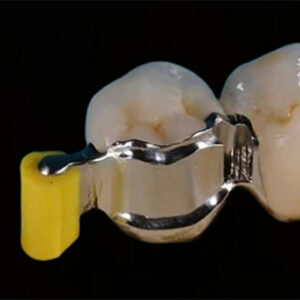
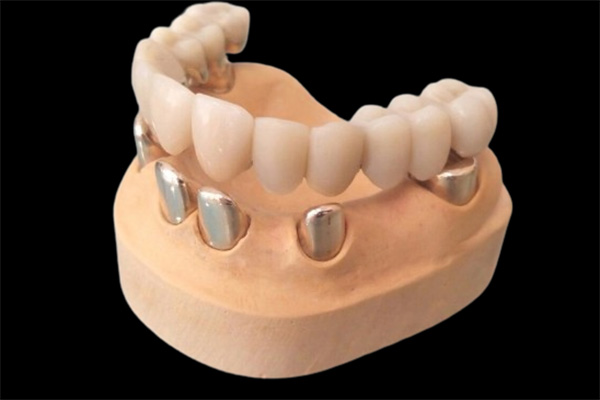
Tooth-Supported Telescopic BridgeBestoDentalStandard Tooth-Supported Telescopic Bridge Teeth hold the bridge firmly through snug-fitting caps that lock together smoothly. One cap fits over each prepared tooth, while its partner attaches to the dental prosthesis. Together they spread chewing forces evenly across support areas. The inner crowns stay cemented on natural teeth, creating anchors below. Outer parts connect directly to the replacement section above.
|
|
|
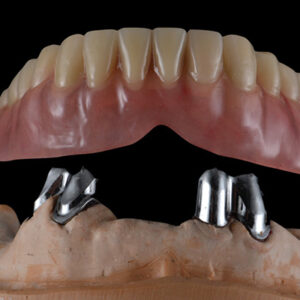
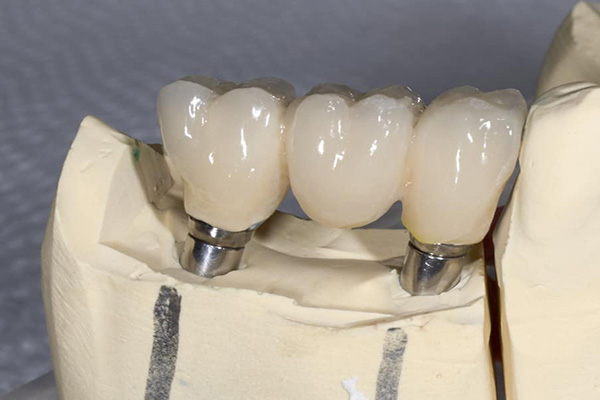
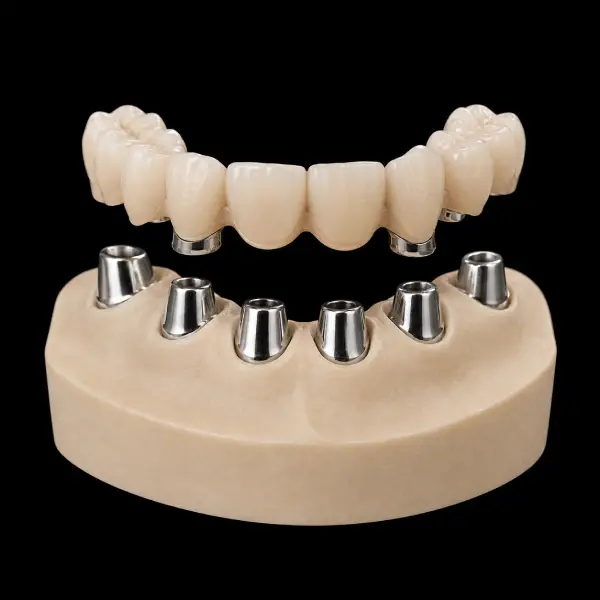
Implant-Supported Telescopic BridgeOur Implant-Supported Telescopic Bridge Holding everything firmly in place – that’s what this bridge aims for when implants replace whole rows of teeth. Built around precision, it spreads biting forces evenly across multiple anchors underneath. Instead of relying on one method alone, it pairs implanted bases with an inner-and-outer crown fit that locks together tightly. Over time, this setup helps maintain function without slipping or shifting unexpectedly.
|
|
|
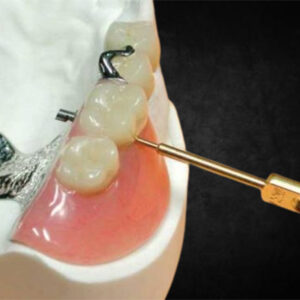
Cobalt-Chrome Telescopic BridgeBestoDentalStandard Cobalt-Chrome Telescopic Bridge Telescopic bridges made by BestoDental offer lasting strength for complex dental restorations, built with cobalt-chrome materials. Precision-engineered inner and outer crowns work together through a tight-fitting mechanism that holds everything firmly in place. Rigidity stays high under pressure because the structure resists bending when forces shift during chewing.
|
|
|
Zirconia Telescopic BridgeOur Zirconia Telescopic Bridge Strong zirconia forms the base of these dental bridges, while a sliding fit locks them securely in place. Looks blend naturally with real teeth, thanks to advanced ceramic shaping. The inner cap glides smoothly into position, adding stability without extra bulk. Performance stays reliable under daily chewing forces. Custom layers work together – durability meets lifelike appearance. Fit adjusts precisely through dual-crown interaction. Material resists wear, yet feels lightweight in the mouth.
|
|
|
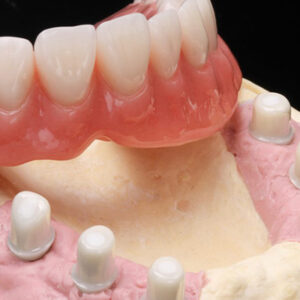
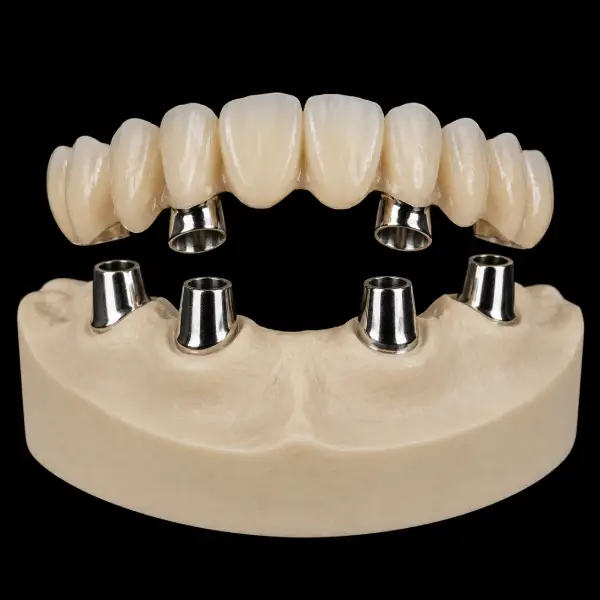
Implant-Assisted Telescopic BridgeBestoDentalStandard Implant-Assisted Telescopic Bridge Starting with real teeth, these bridges add implants for a firmer fit. Stability gets stronger when both work together. Pressure spreads more evenly across the mouth. Lasting function comes from that balanced setup. Support lasts longer because of how they connect.
|
Telescopic Bridge
Telescopic Bridge
Bestodental‘s telescopic bridge is constructed of high-strength noble alloys and state-of-the-art manufacturing technology, offering a top choice for patients with several or all missing teeth. Featuring a double-crown design, it provides superior retention, long-term wear, and easy maintenance—offering a dentist’s first line for a high-quality removable prosthesis system.
- Restores full chewing function with reliable stability.
- Provides periodontal support and helps preserve oral structure.
- Long service life with minimal wear and high patient satisfaction.
- Easily adjustable and modifiable, with low follow-up costs.
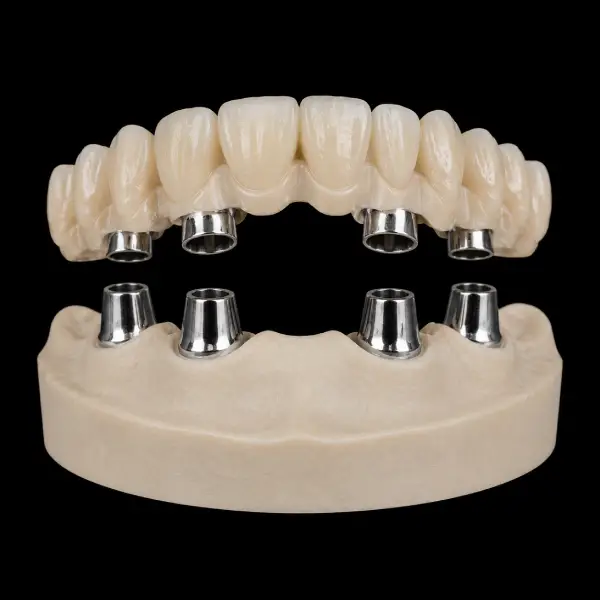
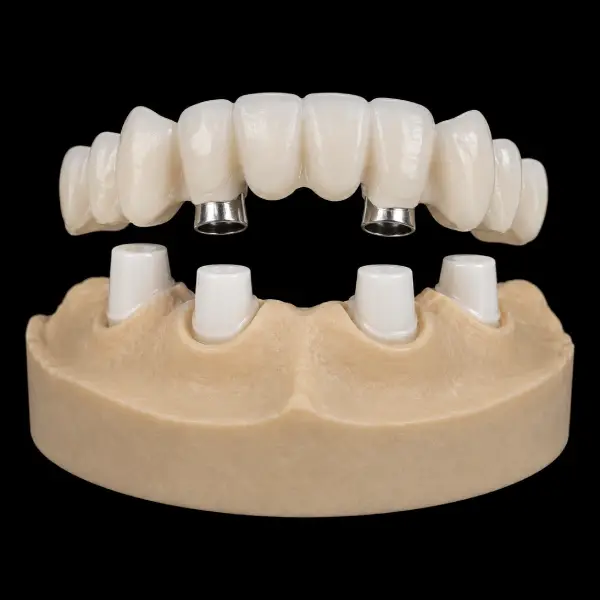
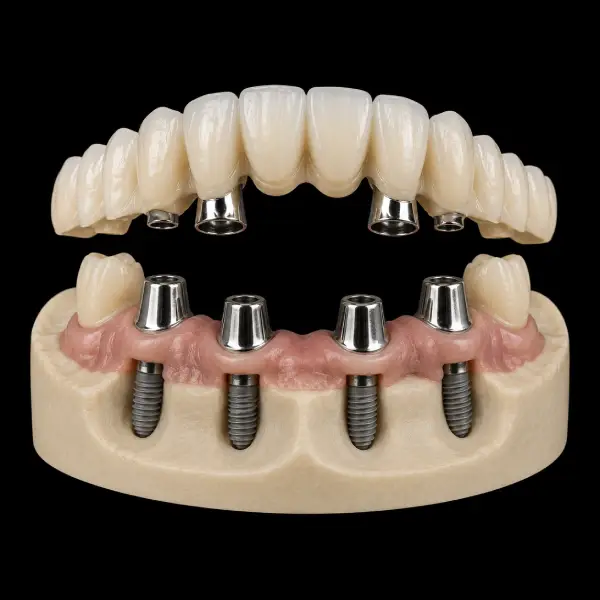
Clinical & Technical Information
A bridge that extends like a telescope offers precise fit and can be taken out when needed, relying on dual crowns – one inside the other – for secure hold. While staying firmly in place during use, it still allows access whenever necessary, balancing strength with serviceability. This kind of restoration looks natural, spreads biting forces wisely, and performs reliably over time. Built for complicated situations, BestoDental’s version works where real teeth, artificial roots, or both provide support.
1. Indications
Our Telescopic Bridge systems are Suitable For:
- Partially edentulous patients requiring high-stability multi-unit bridge restorations
- Cases with compromised abutment teeth requiring splinting and redistribution of occlusal forces
- Long-span posterior or full-arch restorations where conventional fixed bridges are not suitable
- Patients requiring esthetic restorations without visible clasps or external attachments
- Periodontally weakened dentition requiring stabilization through controlled force transmission
- Implant-assisted hybrid cases combining natural teeth and implant abutments
- Full-arch rehabilitation cases requiring removable yet highly stable bridge structures
2. Technical Specifications
| Technical Parameter | Specification |
| Prosthesis Type | Telescopic double-crown fixed-removable bridge system |
| Product Variants | Tooth-Supported Telescopic Bridge / Implant-Supported Telescopic Bridge / Cobalt-Chrome Telescopic Bridge / Zirconia Telescopic Bridge / Implant-Assisted Telescopic Bridge |
| Retention Mechanism | Friction-fit primary (inner) crowns and secondary (outer) bridge structure |
| Manufacturing Method | Conventional casting, CAD/CAM milling, or hybrid digital fabrication depending on case complexity |
| Bridge Structure Type | Multi-unit splinted bridge with telescopic double-crown retention system |
| Abutment Support | Natural teeth, implants, or combined tooth–implant support systems |
| Framework Material | Cobalt-chrome alloy, titanium, zirconia, or CAD/CAM milled metal frameworks |
| Retention Strength | Adjustable friction-based retention depending on taper angle and crown fit precision |
| Fit Accuracy | High-precision passive fit required for multi-abutment synchronization |
| Occlusal Design | Balanced occlusion with controlled load distribution across multiple abutments |
| Esthetic Layering | Zirconia, ceramic, composite, or acrylic veneering options depending on case design |
| Parallelism Requirement | High-precision parallel preparation required for optimal telescopic retention |
| Clasp Visibility | No visible clasps or external retention components |
| Digital Workflow Compatibility | Compatible with STL files, exocad, 3Shape, and CAD/CAM telescopic design workflows |
| Impression Type | Digital intraoral scan or conventional impression techniques supported |
| Adjustment Capability | Retention can be fine-tuned via internal crown modification and surface adjustment |
| Repairability | Moderate repairability; laboratory adjustment required for precision fit modifications |
| Case Turnaround Time | 6–12 working days depending on number of abutments, material selection, and case complexity |
3. Aesthetics
Here are the aesthetics for our Telescopic Bridge systems:
1) Invisible Retention Architecture
Telescopic bridge systems eliminate visible clasps, creating a clean and natural smile appearance.
2) Full-Arch Natural Esthetics
Zirconia, ceramic, and high-quality veneering materials provide lifelike tooth morphology and color integration.
3) Stable Functional Smile Design
The double-crown system maintains stable occlusion and prevents prosthetic displacement during function.
4) High-End Prosthetic Integration
Combines precision engineering with advanced restorative materials to achieve premium full-arch esthetic outcomes.
Order FAQs
1. What information is required to submit a Telescopic Bridge case?
Start with the patient’s full name. Upper or lower jaw comes next – make that clear. Instead of scans, send STL files or proper impressions. Tell about the prepared abutment teeth right after. Implant specs matter when implants are involved. Include how the bite fits together. Finish by explaining exactly how the main and backup crowns should look.
2. Got digital scans?
Right. Files from top intraoral scanners work here – STL output from 3Shape, Medit, or iTero fits just fine. Open-format STLs from exocad also go through. Most standard imports are supported without issue.
3. How does the telescopic system achieve retention in bridge cases?
Stability comes from how tightly the inner and outer crowns grip each other, holding everything firmly in place. A firm connection keeps movement predictable while supporting the replacement tooth securely.
4. Which clinical cases are suitable for telescopic bridges?
When someone has several teeth missing, a telescopic bridge might fit well. These work if the remaining teeth are few but stable. People who care about how their smile looks often choose this option. They’re also used when replacing an entire arch with something that can be taken out. The design helps spread pressure evenly across support points.
5. Can telescopic bridges include implant support?
True. Using telescopic bridges alongside implants or real teeth helps spread biting pressure better while adding support. Sometimes it’s the fit that makes a difference when joining pieces together like this.
6. What materials are used in telescopic bridge systems?
Starting off, cobalt-chrome shows up often when looks matter less than strength. Titanium steps in where lightweight durability is key. Zirconia appears mostly when mimicking natural teeth becomes a priority. Choice shifts based on how much stress a restoration must handle. Design taste also nudges the decision one way or another.
7. How is accuracy ensured in telescopic bridge fabrication?
One detail shapes the next when crafting every case, either through digital drafting or hands-on sculpting from submitted data. Exact fit of inner and outer parts comes down to how closely measurements guide each step.
8. What records are recommended for telescopic bridge cases?
Start with clear notes on the abutment prep – details matter here. When implants are part of the case, include full specs for the system used. Scans or physical models should come through cleanly, no shortcuts. A solid bite record helps avoid guesswork later. Opposing arch info? Always needed, never optional.
9. What are the advantages of telescopic bridge restorations?
Starting off strong, telescopic bridges hold things in place more reliably than traditional fixed or removable types. A closer look shows they also offer a nicer appearance over time. Instead of spreading pressure unevenly, they manage forces across the area more effectively. Their structure tends to stay dependable years down the line, unlike older designs that wear out faster.