|
|
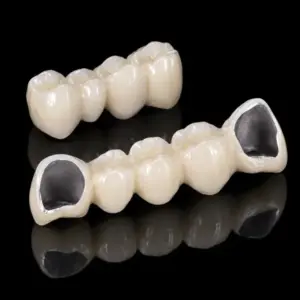
Pd-Ag PFMBestoDental Pd-Ag PFM restoration uses a palladium and silver alloy framework in combination with dental porcelain, which makes up the conventional porcelain-fused-to-metal restoration. The palladium alloy framework material is chosen when the prescription calls for a Pd-Ag alloy.
|
|
|
Pd-Cu PFMOur Pd-Cu PFM restoration involves the use of a palladium and copper alloy framework in combination with dental porcelain. This is done to create a conventional porcelain-fused-to-metal restoration.
|
|
|
Pd-Co PFMWe provide Pd-Co PFM with a palladium-cobalt alloy framework and dental porcelain for conventional fixed PFM restorations. It is intended for cases where a Pd-Co framework is specified as part of the restorative prescription.
|
Semi-Precious PFM
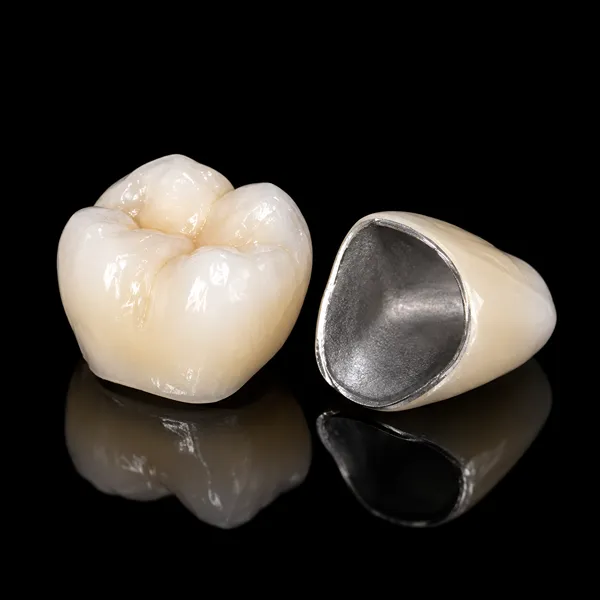
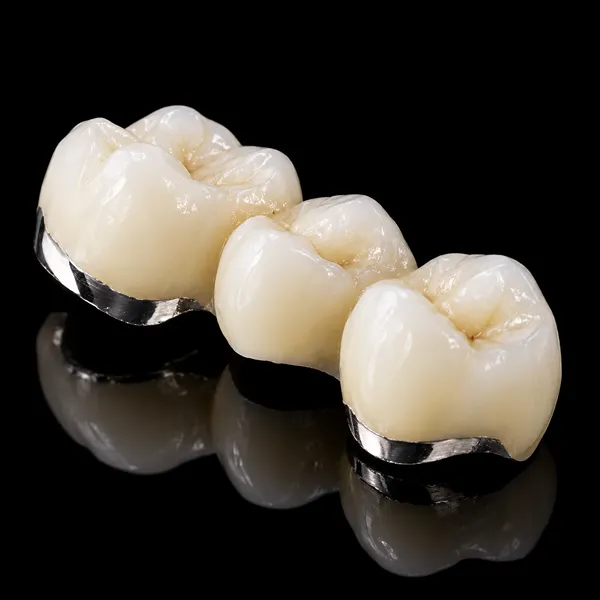
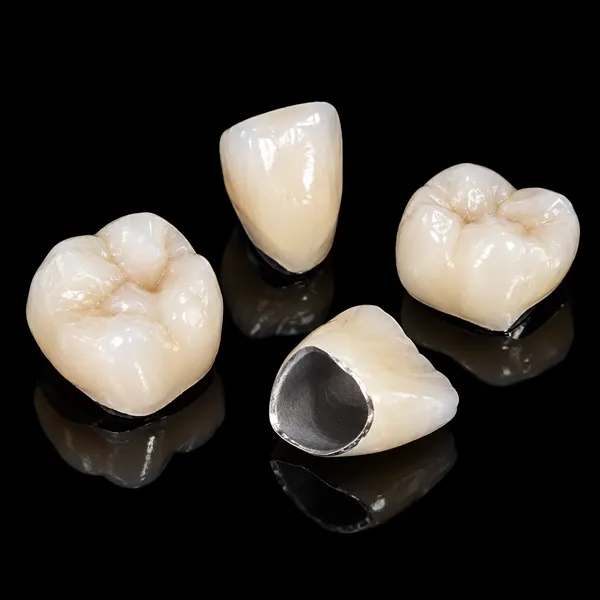
Semi-Precious PFM
Our Semi-Precious PFM restorations combine palladium-based metal frameworks with dental porcelain for conventional fixed PFM crowns and dental bridges. BestoDental provides Pd-Ag, Pd-Cu and Pd-Co framework options according to the material requirements of each case.
- Pd-Ag, Pd-Cu and Pd-Co framework options
- Dental porcelain veneering with a tooth-colored external surface
- Fixed PFM crown and dental bridge applications
- Specified shade and tooth morphology according to the clinical prescription
Category Fixed Restoration
Clinical & Technical Information
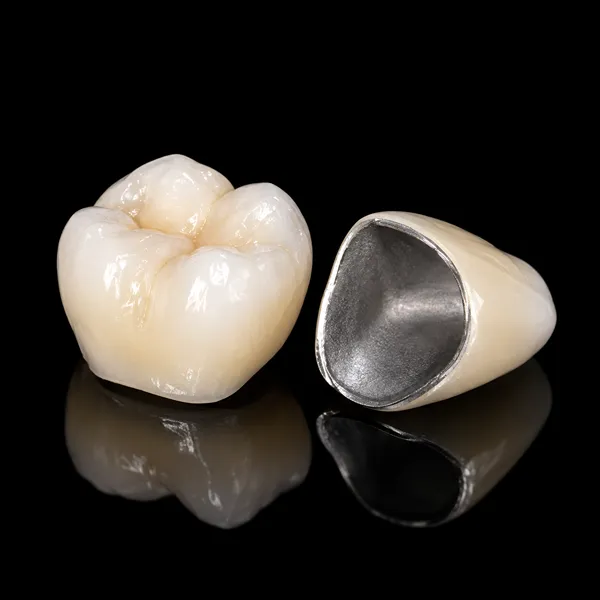
Semi-Precious PFM combines a palladium-based metal framework with dental porcelain to provide a conventional fixed restorative option. BestoDental offers Pd-Ag PFM, Pd-Cu PFM and Pd-Co PFM according to the framework material specified for each case.
1. Indications
Our semi-precious PFM restorations are suitable for:
- Single fixed PFM crowns
- PFM fixed dental bridges
- Cases requiring a conventional porcelain-fused-to-metal restoration
- Cases where a specific palladium-based framework is prescribed
2. Technical Specifications
| Technical Parameter | Specification |
| Product Name | Semi-Precious PFM |
| Product Variants | Pd-Ag PFM, Pd-Cu PFM and Pd-Co PFM |
| Restoration Type | Fixed PFM crowns and dental bridges |
| Framework Material | Palladium-silver alloy, palladium-copper alloy or palladium-cobalt alloy |
| Veneering Material | Dental porcelain |
| Retention | Cement‑Retained |
| Shade | Specified according to the clinical prescription |
3. Aesthetics
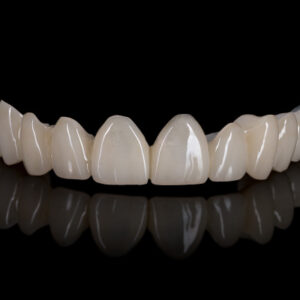
The aesthetics of semi-precious PFM restorations are provided by the dental porcelain veneering over the selected palladium-based metal framework.
1) Tooth-Colored Porcelain
Dental porcelain forms the visible external surface of the PFM restoration.
2) Shade Selection
The porcelain shade is specified according to the prescription and the surrounding dentition.
3) Tooth Morphology
The visible tooth form can be shaped according to the restored tooth and adjacent dentition.
4) Surface Anatomy
External contours and surface anatomy are designed according to the tooth form and restorative requirements.
Order FAQs
1. What is the difference between Pd-Ag PFM, Pd-Cu PFM and Pd-Co PFM?
The main difference is the palladium-based framework alloy. Pd-Ag PFM uses a palladium-silver alloy, Pd-Cu PFM uses a palladium-copper alloy, and Pd-Co PFM uses a palladium-cobalt alloy. All three use dental porcelain as the veneering material.
2. How do I choose the appropriate semi-precious PFM model?
The model should be selected according to the framework material specified in the clinical prescription. The required alloy should be clearly indicated when ordering.
3. Can semi-precious PFM be used for both crowns and bridges?
Yes. Suitable for single crowns and short‑span bridges per restoration design and clinical prescription. Not intended for long‑span bridges
4. Can I specify the framework alloy when ordering?
Yes. The order can specify Pd-Ag, Pd-Cu or Pd-Co according to the material requirement of the case.
5. Can the tooth morphology be customized?
Yes. The visible tooth form and surface anatomy can be designed according to the restored tooth, adjacent dentition and prescription.
6. What information should I provide when ordering a semi-precious PFM?
The order should include the tooth numbers, restoration type, selected framework alloy, shade and any relevant clinical or design instructions.