|
|
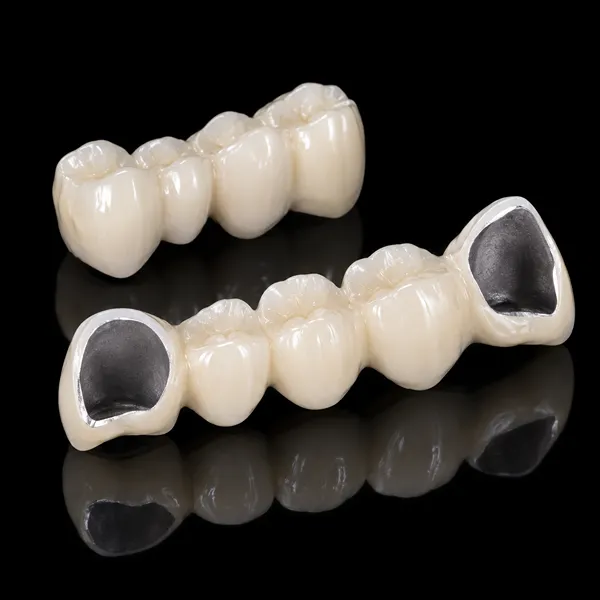
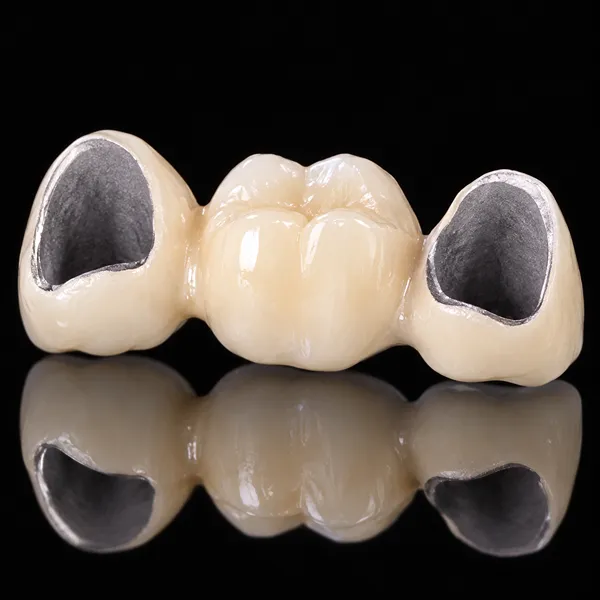
3-unit PFM BridgeOur 3-unit PFM bridge is designed to replace a single missing tooth using two abutment crowns connected to a porcelain-fused-to-metal pontic. Its compact three-unit configuration provides a practical fixed restorative option for selected single-tooth replacement cases.
|
|
|
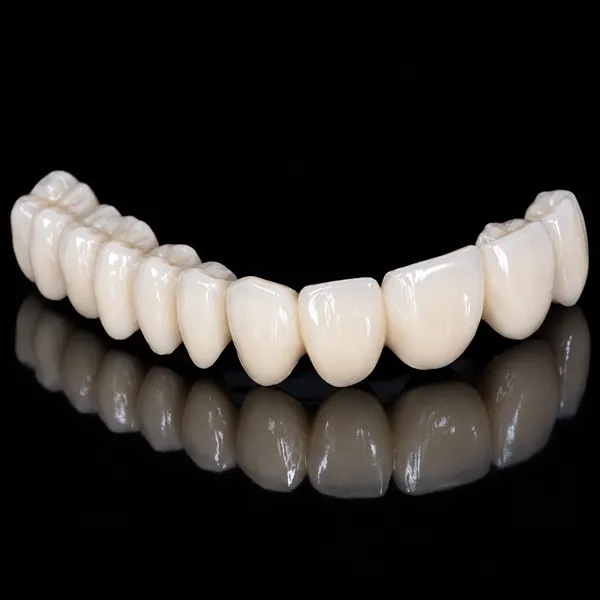
Multi-Unit PFM BridgeBestoDental multi-unit PFM bridge is fabricated with multiple connected units to restore one or more missing teeth within a continuous fixed prosthesis. The framework and pontic arrangement can be customized according to the span, abutment teeth and occlusal requirements.
|
|
|
Long-Span PFM BridgeWe provide long-span PFM bridge restorations for selected cases involving an extended edentulous span. The metal framework is designed to provide structural support across the bridge while the porcelain layer restores the external tooth form and appearance.
|
|
|
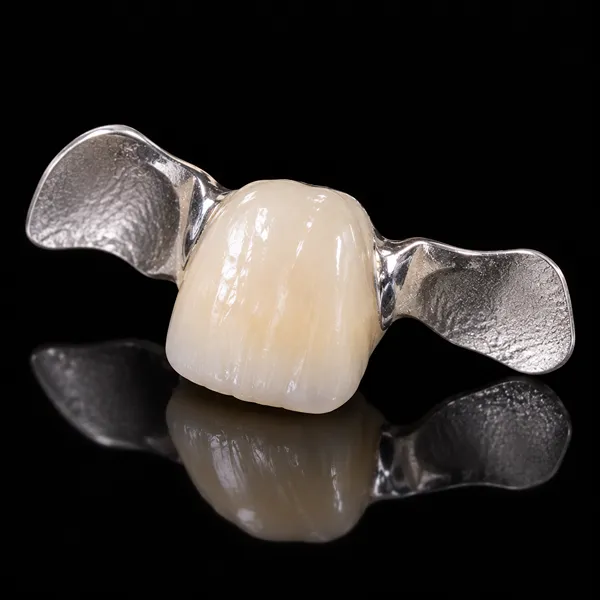
PFM Maryland BridgeOur PFM Maryland bridge combines a porcelain-fused-to-metal pontic with resin-bonded retainer wings designed to bond to the supporting teeth. Its conservative retainer configuration makes it suitable for selected single-tooth replacement cases where a resin-bonded bridge is prescribed.
|
|
|
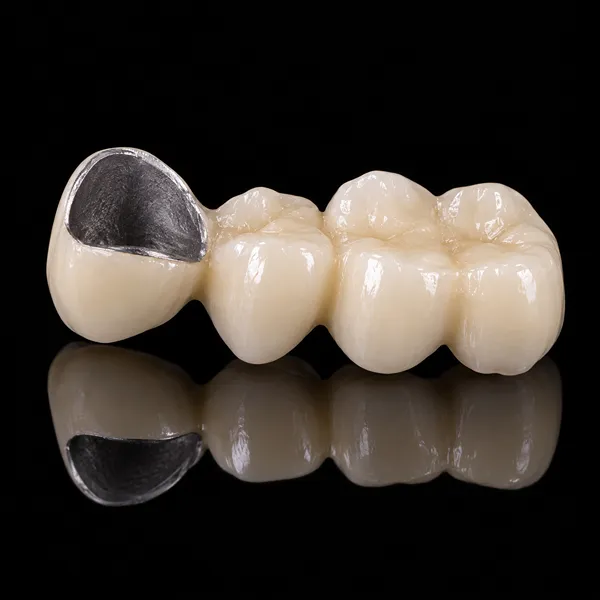
PFM Cantilever BridgeBestoDental PFM cantilever bridge uses a fixed retainer or retainers on one side of the pontic rather than conventional abutment support on both sides. The framework and pontic are designed according to the prescribed tooth position, available support and functional requirements.
|
PFM Bridge
PFM Bridge
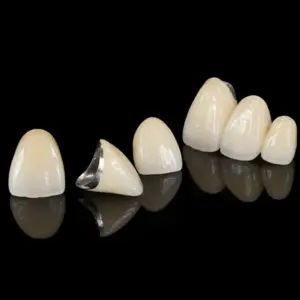
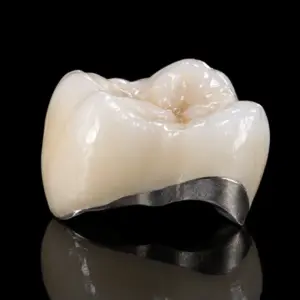
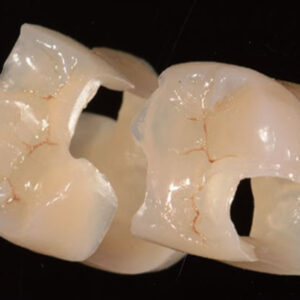
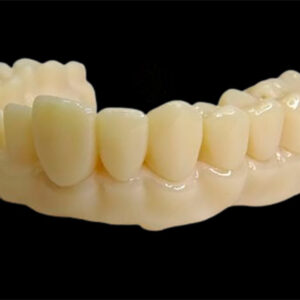
Our PFM bridge restorations provide a versatile fixed metal-ceramic solution for replacing one or more missing teeth. BestoDental offers conventional, extended-span and specialized bridge configurations to accommodate different tooth positions, support arrangements and restorative requirements.
- 3-unit, multi-unit and long-span PFM bridge configurations
- PFM Maryland and cantilever bridge options for selected indications
- Customized metal framework, pontic design, shade and tooth morphology
- Customized occlusal anatomy, proximal contacts and porcelain contours for individual cases
Clinical & Technical Information
PFM bridge is a fixed metal-ceramic restorative option that combines a metal framework with veneering porcelain to replace one or more missing teeth. BestoDental provides different bridge configurations, including conventional multi-unit, long-span, Maryland and cantilever designs, to accommodate variations in tooth position, edentulous span and restorative requirements.
1. Indications
Our PFM bridge restorations are suitable for:
- Replacement of one or more missing teeth where a fixed bridge is clinically appropriate
- Cases requiring a porcelain-fused-to-metal fixed restorative design
- Single-tooth replacement with a conventional 3-unit bridge configuration
- Multiple-tooth replacement requiring a multi-unit or extended-span bridge
- Selected cases requiring a resin-bonded Maryland bridge design
- Selected cases where a cantilever bridge is specifically prescribed
- Cases requiring customized pontic morphology, shade and occlusal anatomy
2. Technical Specifications
| Technical Parameter | Specification |
| Product Name | PFM bridge |
| Bridge Configurations | 3-unit, multi-unit, long-span, Maryland and cantilever bridge designs |
| Framework Material | Dental metal alloy selected according to the prescribed bridge design |
| Veneering | Dental porcelain fused to the metal framework |
| Retention | Cement-Retained or Resin-Bonded according to the selected model |
| Bridge Span | Customized according to the number and position of missing teeth |
| Abutment Design | Customized according to the prepared teeth, support requirements and bridge configuration |
| Pontic Design | Customized according to the missing tooth position, ridge relationship and adjacent dentition |
| Wing Design | Retainer wings incorporated for Maryland bridge designs according to the prescription |
| Cantilever Support | One-sided abutment support according to the prescribed cantilever configuration |
| Shade | Specified according to the prescription and coordinated with the adjacent dentition |
| Tooth Morphology | Customized according to tooth position and surrounding dentition |
| Occlusal Design | Customized according to opposing dentition and functional requirements |
| Proximal Contacts | Customized according to adjacent teeth and restorative requirements |
3. Aesthetics
Aesthetics for our PFM bridge restorations focus on coordinating the pontics and abutment crowns with the adjacent dentition through appropriate shade, morphology, contour and surface anatomy.
1) Tooth-Colored Porcelain
The porcelain veneering layer provides a tooth-colored external surface designed to reproduce the appearance of natural teeth across the visible portions of the bridge.
2) Customized Pontic Appearance
Pontic form, facial contour and surface anatomy can be adjusted according to the missing tooth, adjacent teeth and available restorative space.
3) Shade Coordination
The porcelain shade is selected according to the prescription and coordinated with the surrounding dentition for a consistent overall appearance.
4) Anterior Bridge Aesthetics
For anterior PFM bridges, incisal edge position, line angles, proximal contours and facial surface anatomy can be customized to complement the adjacent teeth.
5) Occlusal and Proximal Contour
Occlusal anatomy and proximal contacts are designed according to the opposing and adjacent dentition while maintaining the required bridge framework and porcelain contours.
Order FAQs
1. What information is needed for a long-span PFM bridge?
The prescription should include the missing tooth numbers, abutment teeth, bridge design, shade and relevant occlusal information. For extended spans, detailed preparation and bite information are particularly important for coordinating the framework and pontic design.
2. What is the difference between a conventional PFM bridge and a PFM Maryland bridge?
A conventional PFM bridge generally uses full-coverage abutment crowns to support the pontic, while a PFM Maryland bridge uses resin-bonded retainer wings attached to supporting teeth. The appropriate design depends on the clinical indication and planned retention method.
3. Can a PFM Maryland bridge be customized for anterior teeth?
Yes. The pontic morphology, shade, facial contour, incisal form and retainer wing design can be customized according to the anterior tooth being replaced and the supporting teeth.
4. What makes a PFM cantilever bridge different from a conventional bridge?
A cantilever bridge uses support on one side of the pontic rather than abutment teeth on both sides. Because the design transfers functional forces differently, it is generally reserved for selected cases where the supporting tooth or teeth and occlusal conditions are suitable.
5. Can the pontic design be customized?
Yes. Pontic shape, emergence profile, facial contour, proximal contacts and occlusal anatomy can be customized according to the missing tooth, adjacent dentition and restorative requirements.
6. Can the shade and porcelain morphology be customized for a PFM bridge?
Yes. Shade, tooth morphology, incisal characteristics, surface anatomy and porcelain contour can be specified according to the prescription, particularly for visible anterior restorations.