|
|
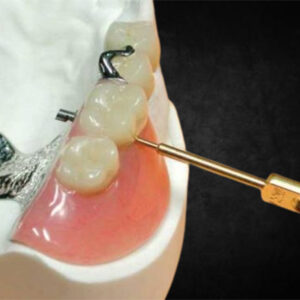
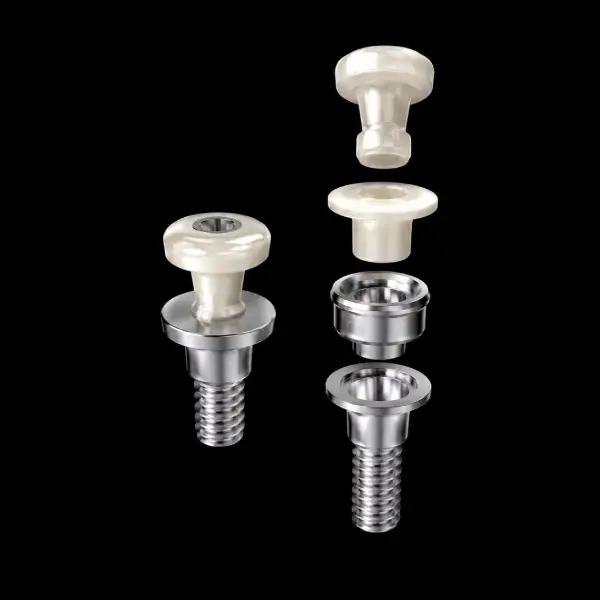
Standard Stud-Snap AttachmentBestoDental Standard Stud-Snap Attachment Built for everyday use, BestoDental crafts Stud-Snap Attachments that support dependable implant-retained dentures without complicating treatment steps. While stability matters most, attention also goes toward how parts align over time – ensuring smooth operation day after day. Because long-term success depends on simplicity, features are shaped around hassle-free servicing, whether handled by dentist or wearer.
|
|
|
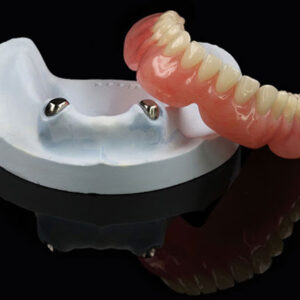
Low-Profile Stud-Snap AttachmentOur Low-Profile Stud-Snap Attachment Engineered by BestoDental, our Low-Profile Stud-Snap Attachments fit tightly when vertical space is minimal. Where anatomy restricts room, these attachments still hold securely. Their compact form allows more freedom in restoration planning – yet they deliver consistent grip even under tight conditions.
|
|
|
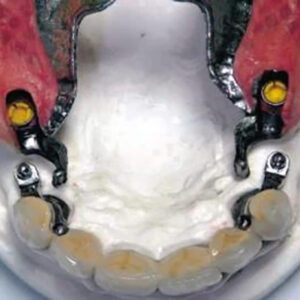
High-Retention Stud-Snap AttachmentOur High-Retention Stud-Snap Attachment Stability during movement defines how these attachments perform when stress appears. When pressure builds up, their design holds firm, resisting dislodgement effectively. What sets them apart? A focused approach to secure fit over extended periods. Performance stays consistent even in demanding situations. The structure adapts well where strong anchoring matters most. Reliability emerges not from claims but from function under real conditions.
|
|
|
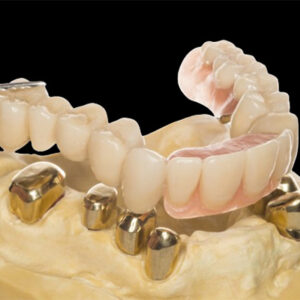
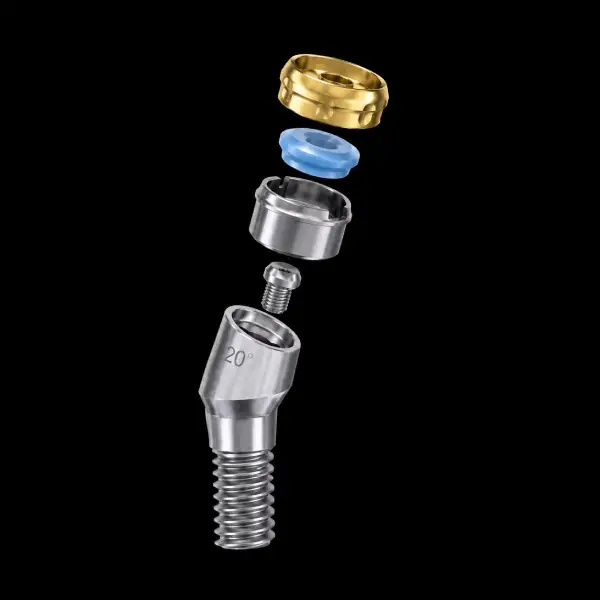
Angled Stud-Snap AttachmentOur Angled Stud-Snap Attachment Engineered by BestoDental, the Angled Stud-Snap Attachments address implant misalignment in challenging clinical scenarios. Despite irregular positioning, these components enable precise prosthesis placement. Their structure promotes smoother insertion angles – yet keeps overdenture stability intact throughout function.
|
Stud-snap Attachment
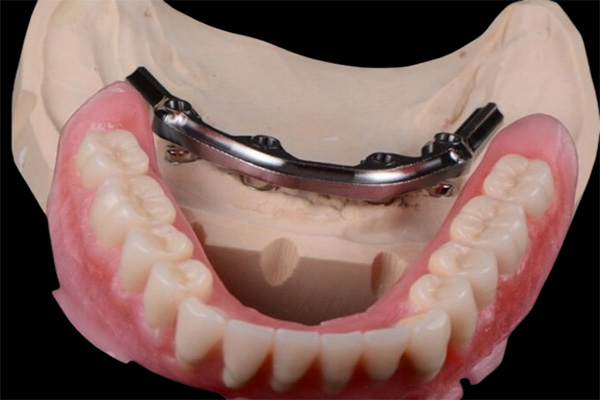
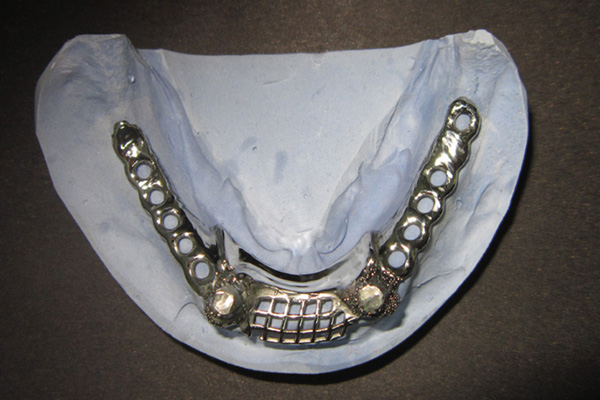
Stud-snap Attachment
Bestodental provides high-quality stud-snap attachments designed and manufactured by our experienced technical team to ensure maximum stability for implant-retained dentures.
- Simple to clean and maintain—ideal for long-term patient use.
- Delivers strong, secure support for dentures, minimizing movement during daily function.
- Engineered for precision fit and long-lasting retention using advanced CAD/CAM technology.
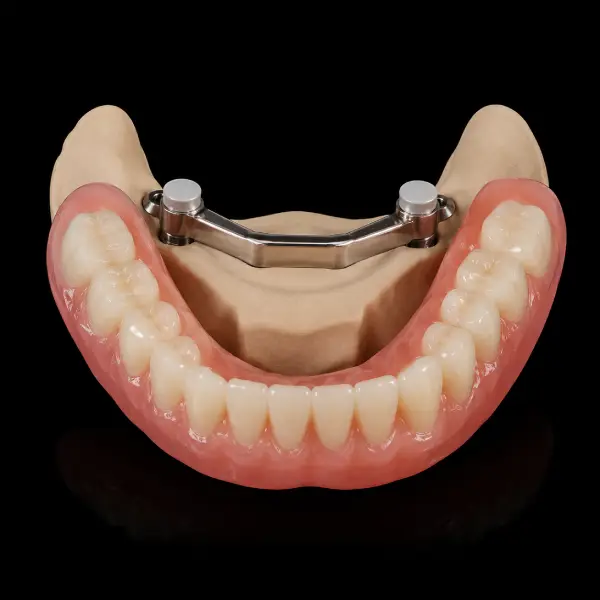
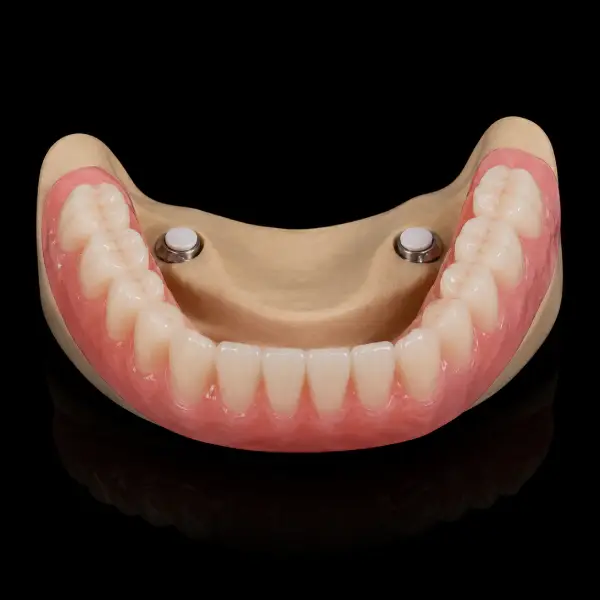
Clinical & Technical Information
Stud-Snap Attachment is a resilient implant overdenture attachment system designed to improve denture retention, stability, and patient comfort. The attachment consists of a stud abutment and a replaceable retention insert, allowing secure denture fixation while maintaining ease of insertion and removal. Stud-Snap attachments are widely used in implant-retained overdenture cases due to their simplicity, reliability, and cost-effectiveness.
1. Indications
Our Stud-Snap Attachments are Suitable For:
- Mandibular implant-retained overdentures supported by two or more implants
- Maxillary implant overdenture cases with appropriate implant distribution
- Edentulous patients seeking improved denture retention and stability
- Patients experiencing poor retention with conventional complete dentures
- Cases requiring a removable prosthesis with simplified hygiene maintenance
- Implant overdenture restorations with limited restorative space
- Patients requiring a cost-effective alternative to bar-retained overdentures
- Implants with angulation discrepancies requiring attachment compensation
2. Technical Specifications
| Technical Parameter | Specification |
| Product Type | Implant Overdenture Stud Attachment System |
| Available Options | Standard Stud-Snap / Low-Profile Stud-Snap / High-Retention Stud-Snap / Angled Stud-Snap |
| Indication | Implant-Retained Removable Overdentures |
| Attachment Design | Stud Abutment with Replaceable Retention Insert |
| Retention Levels | Multiple retention options available according to clinical requirements |
| Material | Titanium Alloy Abutment with Wear-Resistant Nylon Retention Inserts |
| Profile Height | Standard and low-profile options available for varying restorative space conditions |
| Angulation Compensation | Angled attachment options available for non-parallel implant situations |
| Denture Compatibility | Full Arch Implant Overdentures |
| Maintenance | Replaceable retention inserts for long-term serviceability |
| Implant Compatibility | Compatible with multiple implant systems through corresponding abutment connections |
| Laboratory Processing | Chairside or laboratory pickup procedures supported |
| Digital Workflow Compatibility | Compatible with conventional and digital overdenture workflows |
| Case in Lab Time | Typically incorporated into standard overdenture fabrication workflow |
3. Clinical Advantages
Built for steady hold, Stud-Snap systems simplify cleaning while supporting comfort – this mix explains their common choice status among implant-retained dentures. Though small, their role shapes daily function well across long-term wear.
1) Reliable Denture Retention
When in use, the attachment mechanism holds firmly, yet permits straightforward removal by individuals when hygiene maintenance is needed.
2) Easy Maintenance
When signs of wear appear, swapping retention inserts becomes possible – this cuts future upkeep expenses while making dental adjustments easier. A worn insert does not mean full replacement; instead, only the damaged part gets changed, streamlining repair tasks. Cost savings build up over time since minor fixes avoid bigger interventions. Clinicians benefit from straightforward access without complex tools or procedures.
3) Space-Efficient Design
Where restoration space is tight, minimal designs still provide reliable hold. Though small, these choices keep function without adding bulk. Even reduced forms manage grip well when shaped right. In narrow areas, slim versions work – without slipping loose.
4) Angulation Compensation
When implants do not align perfectly, custom slanted connectors can assist in securing dentures more effectively. These tailored parts adjust for uneven positioning, making placement smoother during complex cases.
Order FAQs
1. What info is needed for a Stud-Snap Attachment order?
Provide implant brand and connection type. List implant positions and indicate upper or lower overdenture. Include implant count and available vertical space. Specify retention type (standard, low-profile, high-retention, or angled). Attach STL files or scanned master casts if available.
2. Stud-Snap compatibility across implant systems?
Stud-Snap attachments are matched to major implant systems by connection type. Exact implant brand and platform must be confirmed before fabrication to ensure correct coupling.
3. Do you support digital workflows for overdenture attachments?
Yes. We accept digital impressions and STL files from intraoral or lab scanners. Digital planning integrates implant positions and overdenture design into CAD workflows.
4. Standard vs Low-Profile vs High-Retention vs Angled Stud-Snap comparison?
Standard fits most cases. Low-Profile is for limited vertical space. High-Retention improves stability in loose dentures. Angled types correct non-parallel implants.
5. How to choose the correct retention level?
It depends on patient dexterity and arch stability. High-retention is used for stronger fixation needs. Moderate retention balances function and ease of cleaning.
6. How long do Stud-Snap cases take?
Usually 3–7 working days depending on complexity. Timing may vary with customization requirements.
7. Can Stud-Snap be used in both maxillary and mandibular overdentures?
Yes. It is mainly used in the mandible but can also be applied in the maxilla when implant position and bone support are adequate.