|
|
Monolithic Implant-Supported Zirconia BridgeBestoDental monolithic implant-supported zirconia bridge is designed to provide full-strength implant-supported restorations which require unsurpassed durability and reliability. Precise Implant Fit and Resistant to Heavy Occlusal Forces, extruded from solid zirconia. Advanced digital manufacturing ensures accurate passive adaptation and stable clinical performance. They are an ideal solution for posterior implant-supported bridge restorations.
|
|
|
Layered Implant-Supported Zirconia BridgeOur zirconia implant-supported bridges are constructed with a robust zirconia structure and then hand layered with porcelain for highly natural esthetics. They provide realistic translucency and shade characterization and have consistent structural support. Precision digital fabrication provides excellent implant fit and long-term function. They are well suited for implant bridges in highly visible areas.
|
|
|
Multilayer Implant-Supported Zirconia BridgeBestoDental multilayer implant-supported zirconia bridges have a natural shade gradient and high translucency across the restoration. They offer a pleasing design without using porcelain layering and have a high strength and durability. Digital production ensures precise implant connections and predictable long-term performance. They are suitable for both anterior and posterior implant-supported bridges.
|
|
|
High Translucency Implant-Supported Zirconia BridgeOur high translucency implant-supported zirconia bridges are designed for implant restorations where natural esthetics are the primary objective. The advanced zirconia material offers superior light transmission while maintaining dependable mechanical performance. Precision digital fabrication provides accurate implant fit and consistent restoration quality. They are an excellent choice for implant bridges in the smile zone.
|
|
|
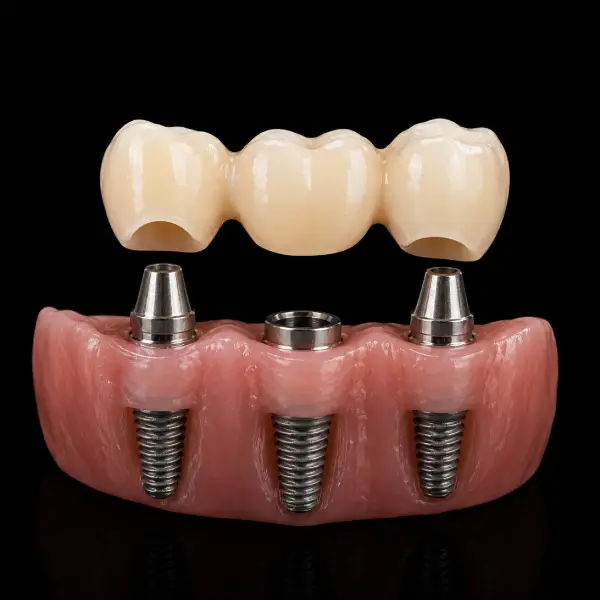
3-Unit Implant-Supported Zirconia BridgeBestoDental 3-unit implant-supported zirconia bridges provide a reliable solution for replacing multiple adjacent missing teeth with implant support. Their high-strength zirconia construction offers excellent durability and accurate fit for predictable clinical outcomes. Digital manufacturing enhances passive adaptation and long-term stability. They are suitable for short-span implant bridge restorations.
|
|
|
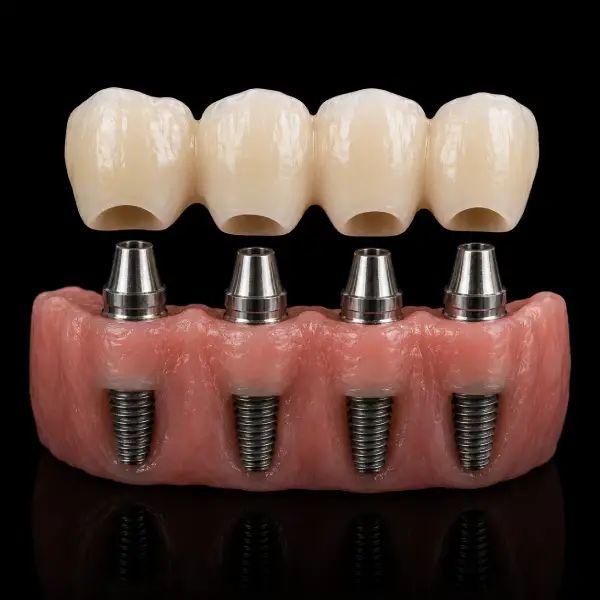
4-Unit Implant-Supported Zirconia BridgeOur 4-unit implant-supported zirconia bridges are designed for larger implant-supported restorations requiring exceptional strength and long-term stability. The durable zirconia structure withstands functional loading while maintaining accurate implant fit. Precision digital fabrication supports predictable performance and reliable clinical outcomes. They are ideal for extended-span implant bridge restorations.
|
Implant-Supported Zirconia Bridges
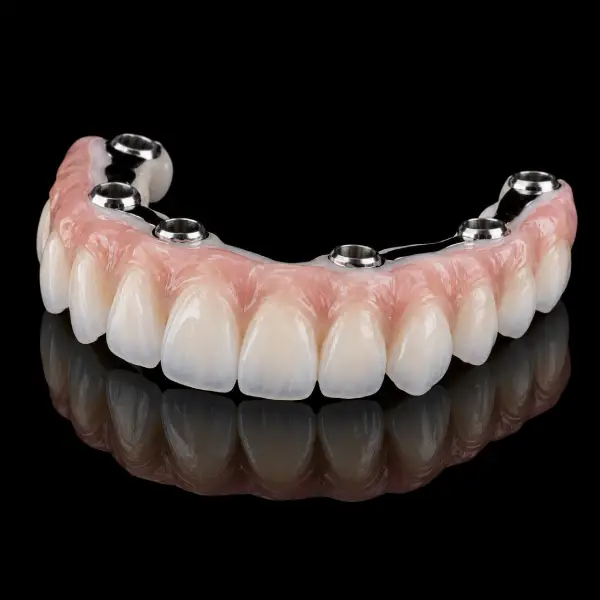
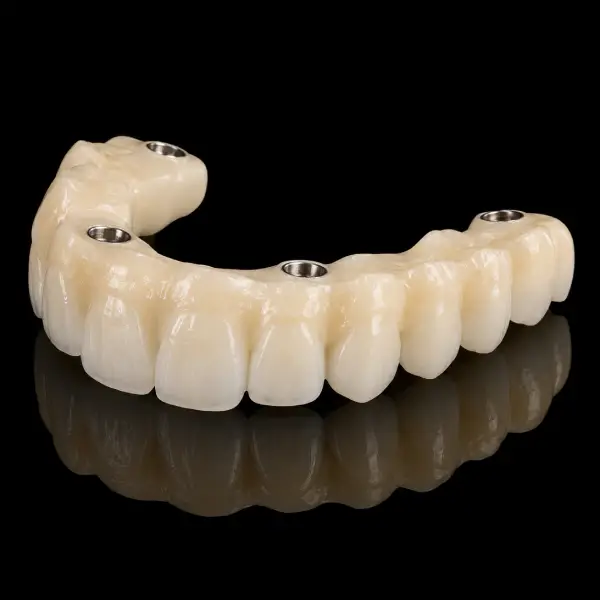
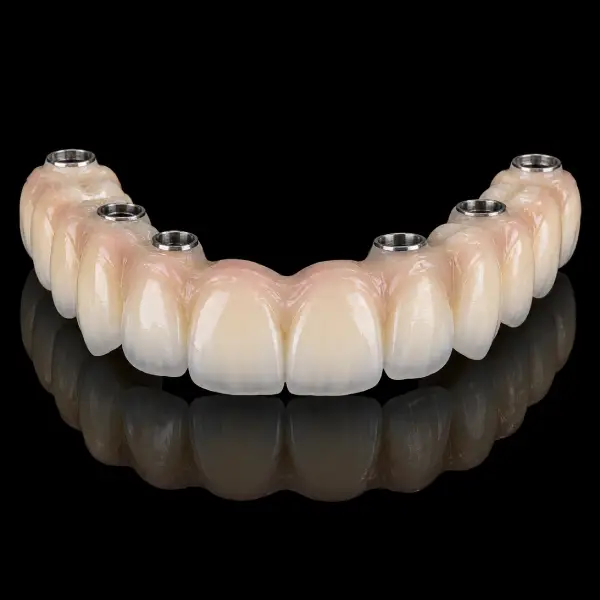
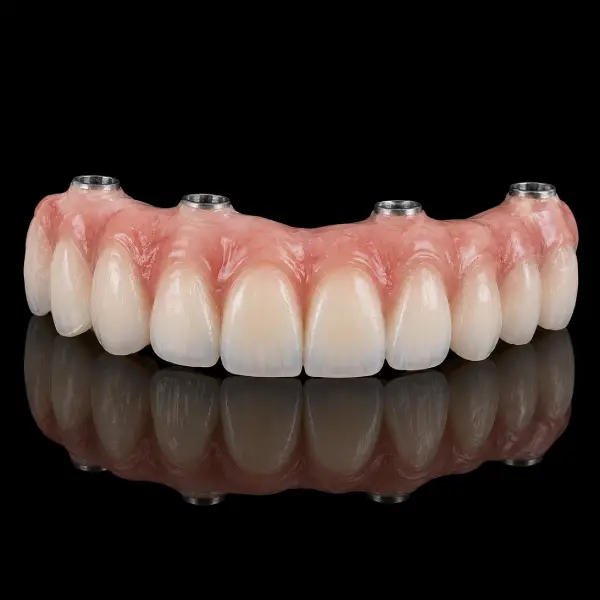
Implant-Supported Zirconia Bridges
Our Implant-Supported Zirconia Bridges are designed to restore multiple missing teeth with high strength, stability, and long-term functional performance on dental implants. They provide a reliable full-arch or multi-unit solution with excellent esthetics and precise fit.
- High-strength monolithic zirconia structure provides excellent resistance to heavy occlusal forces in multi-unit implant restorations.
- CAD/CAM precision design ensures passive fit across multiple implants, reducing stress on implant components.
- Natural translucency and customized shading deliver lifelike esthetic results for anterior and posterior regions.
- Suitable for screw-retained and hybrid bridge designs depending on clinical and restorative requirements.
Clinical & Technical Information
Zirconia bridges placed through implants are a long-term, metal-free solution for the replacement of more than one missing tooth that can be used to restore both function and esthetics. These restorations are advanced CAD/CAM manufactured restorations that ensure natural-looking results for partial edentulous cases, excellent biomechanical strength and precise implant fit. Every BestoDental restoration is digitally designed and accurately milled to guarantee proper implant adaptation, stable occlusion, and long-term clinical longevity.
1. Indications
Our implant-supported zirconia bridges are suitable for:
- Replacement of multiple missing teeth with implant-supported fixed restorations
- Partially edentulous patients requiring implant-supported bridge restorations
- Three-unit and four-unit implant-supported bridge cases
- Anterior implant bridges requiring enhanced esthetics
- Posterior implant bridges subjected to high occlusal forces
- Patients seeking metal-free implant-supported restorations
- Cases requiring excellent long-term strength and wear resistance
- Digital implant workflows using intraoral scans or conventional impressions
- Patients with sufficient implant support for fixed bridge restorations
- Implant restorations requiring accurate passive fit and stable occlusion
- Cases demanding highly biocompatible restorative materials
- Patients requiring customized implant bridge contours for optimal soft tissue support
2. Technical Specifications
| Technical Parameter | Specification |
| Material Type | Monolithic zirconia, layered zirconia, multilayer zirconia, high translucency zirconia |
| Restoration Type | Implant-supported fixed bridge restoration |
| Product Variants | Monolithic Implant-Supported Zirconia Bridge / Layered Implant-Supported Zirconia Bridge / Multilayer Implant-Supported Zirconia Bridge / High Translucency Implant-Supported Zirconia Bridge / 3-Unit Implant-Supported Zirconia Bridge / 4-Unit Implant-Supported Zirconia Bridge |
| Bridge Span | 3-unit and 4-unit implant-supported bridge configurations |
| Retention Method | Screw-retained or cement-retained depending on treatment plan |
| Flexural Strength | Approx. 600–1200 MPa depending on zirconia material selected |
| Implant Compatibility | Compatible with major implant systems upon request |
| Abutment Compatibility | Custom or prefabricated titanium and zirconia abutments |
| Manufacturing Process | Fully digital CAD/CAM design and precision milling |
| Marginal & Implant Fit | High-precision implant interface and passive bridge fit |
| Occlusal Design | Customized anatomical occlusion with balanced force distribution |
| Surface Finish | Polished, stained, glazed, or layered ceramic finish |
| Shade System | VITA Classical and VITA 3D-Master compatible |
| CAD/CAM Compatibility | STL, 3Shape, exocad compatible workflows |
| Metal Content | 100% metal-free zirconia bridge (excluding titanium base or abutment when applicable) |
| Case in Lab Time | Typically 2–3 working days |
3. Aesthetics
Our aesthetics of implant-supported zirconia bridges
1) Natural tooth-like appearance
Advanced zirconia materials offer high shade qualities and high translucency, enabling implant-supported bridges to be integrated with surrounding teeth aesthetically.
2) Several zirconia choices for personalized esthetics
The monolithic, layered, multilayer and high translucency zirconia allow the clinician to choose the optimum strength-to-esthetic ratio in each clinical scenario.
3) Harmonious soft tissue emergence
Customized digital bridge contours support natural peri-implant soft tissue architecture and improve the overall esthetic outcome.
4) Stable long-term color performance
High-quality zirconia resists staining and discoloration, maintaining consistent shade and appearance over years of clinical function.
5) Seamless multi-unit anatomical design
Digital CAD/CAM technology reproduces natural tooth anatomy, the contours of the pontics and the occlusal morphology with high accuracy to create highly esthetic multi-unit implant restorations.
Order FAQs
1. Which information does the implant-supported zirconia bridge case need?
Please include the following information for the patient: Full Name, Detailed Implant Positions and Implant System with Platform Information. Describe the extent of the missing teeth (full-arch, partial-arch or multi-unit bridge). STL/PLY scan data, scan body files, antagonist arch scans, bite registration, and shade selection are also required for accurate design and occlusion.
2. Do you accept digital impressions and which scanning systems are compatible?
Yes. We fully support digital workflows and accept STL and PLY files from most major intraoral scanners, including 3Shape, exocad, Medit, iTero, and Dental Wings. These files can be directly used in our CAD/CAM system for Zirconia implant bridge design and manufacture.
3. What is the average time for the zirconia bridges to be made?
Typically, it takes 5-7 working days to prepare the product after all the necessary data has been received and the design has been approved. For such a bigger case as a full arch bridge or a case where the implants need complex alignment, the processing time may be longer.
4. What types of implant bridge designs are available?
We provide screw-retained implant bridges, cement-retained hybrid bridges and full arch implant-supported zirconia frameworks. The design may be tailored to the clinical preference, implant angulation, and prosthetic needs.
5. How is passive fit ensured in multi-unit implant bridges?
Passive fit is achieved through digital implant alignment, precise scan body positioning, and CAD adjustments that compensate for implant divergence. Careful attention is given to internal fit, connector strength, and framework accuracy to reduce stress on implants.
6. What materials are used for implant-supported zirconia bridges?
We primarily use high-strength monolithic zirconia or layered zirconia depending on esthetic requirements. Material selection is based on functional load, esthetic zone, and the number of missing teeth being restored.
7. What information helps improve occlusal accuracy for full-arch bridges?
Accurate bite registration, opposing arch scans, and detailed occlusal scheme information are essential. Providing details about bruxism, vertical dimension, and any temporary restoration data will help optimize occlusion and improve long-term stability.