|
|
Standard Composite InlayBestoDental Standard Composite Inlay gives everyday back tooth repairs a solid upgrade. Built to last, they blend in easily thanks to lifelike appearance and sensible pricing. These restorations handle regular chewing demands without drawing attention. Performance stays consistent over time, matching real teeth in both look and function.
|
|
|
High-Strength Composite InlayOur High-Strength Composite Inlay handles heavy chewing pressure well. Built tough, they resist cracks over time. Strength comes from reinforced materials inside. Back teeth fixings last longer because of that. Tough jobs need tougher solutions – this fits right in.
|
|
|
Nano Composite InlayBestoDental Nano Composite Inlay relies on tiny reinforced particles that boost how well they shine after polishing. These bits also fight discoloration over time. Their color matches real teeth closely, almost like nature made them. When looks matter most in dental fixes, these fit right into place. Finishing smooth, they blend without standing out.
|
|
|
CAD/CAM Composite InlayOur CAD/CAM Composite Inlay starts with a scan, and each inlay takes shape through careful digital modeling. Then precision milling carves the design into durable composite material. This method ensures tight margins without guesswork. Labs finish pieces faster because steps flow smoothly from one to next. Clinicians see better results when seating restorations chairside. Accuracy comes not from luck but repeatable technology. Every detail follows the planned geometry exactly.
|
Composite Inlay
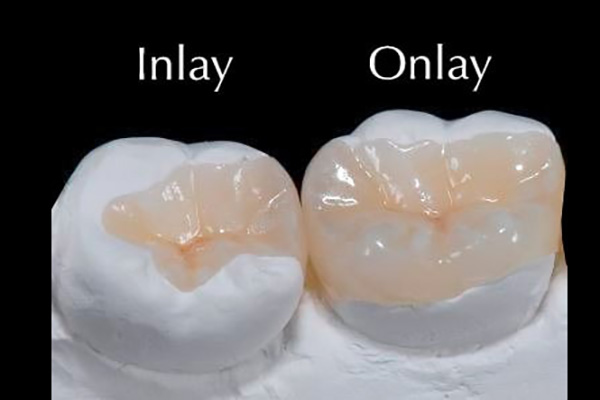
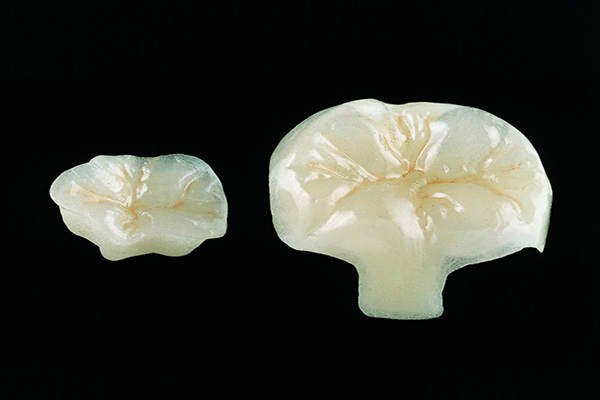
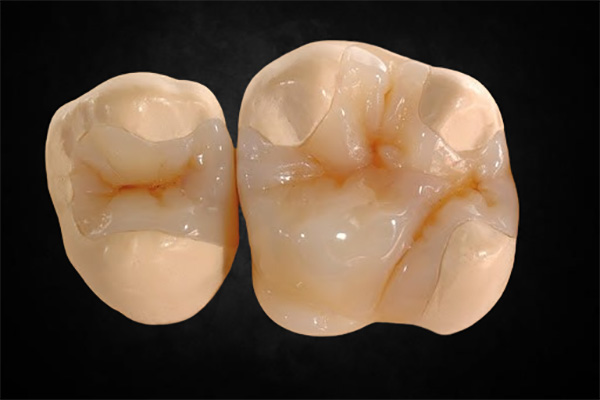
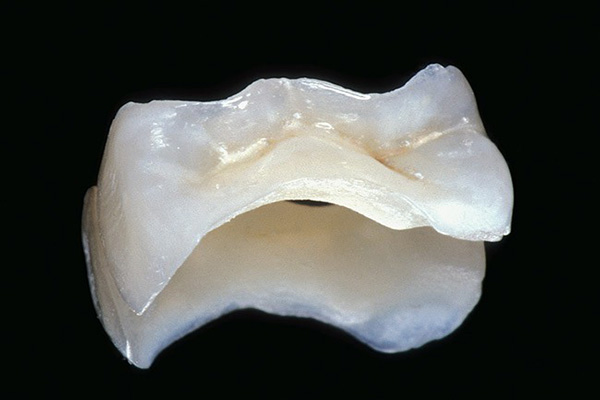
Composite Inlay
Bestodental provides high-quality composite inlays designed to quickly and effectively restore decayed tooth areas while ensuring long-term stability and comfort.
- Helps prevent future tooth decay by providing a strong, sealed restoration.
- Minimizes polymerization shrinkage and reduces composite wear over time.
- Natural tooth-like appearance allows seamless integration with surrounding dentition.
- Covers larger areas while preserving more of the patient’s natural tooth structure.
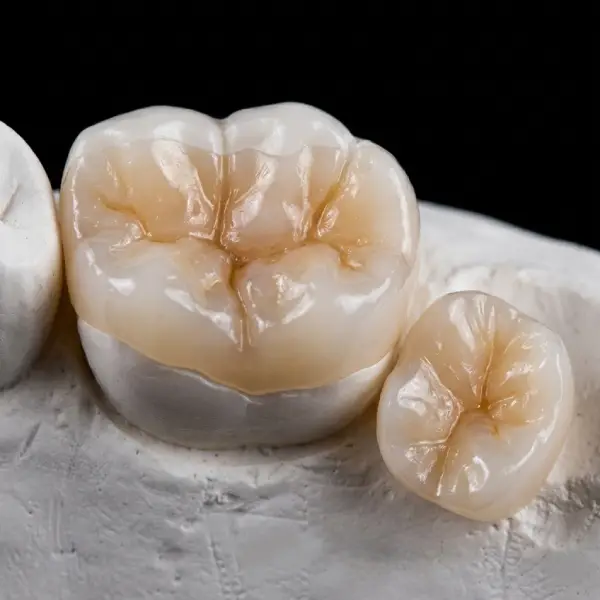
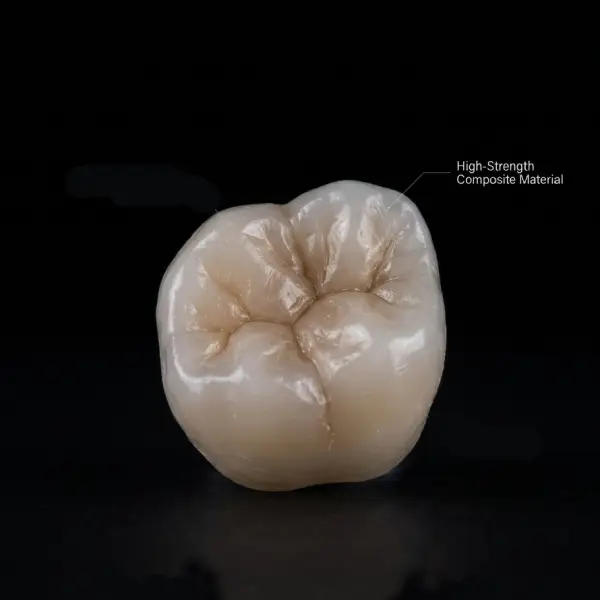
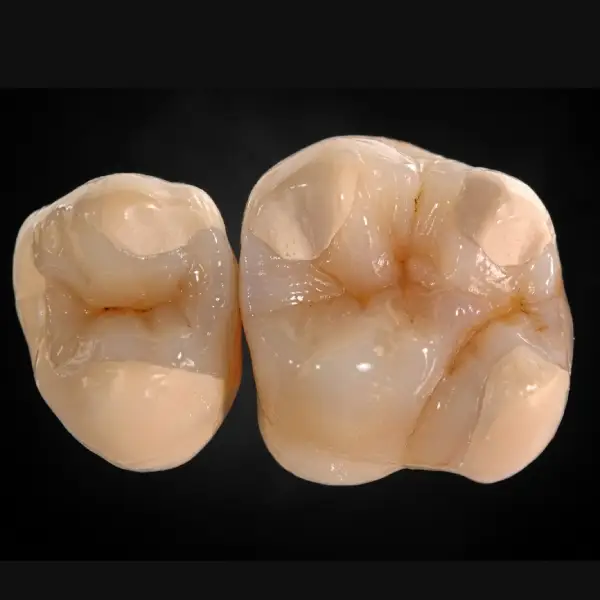
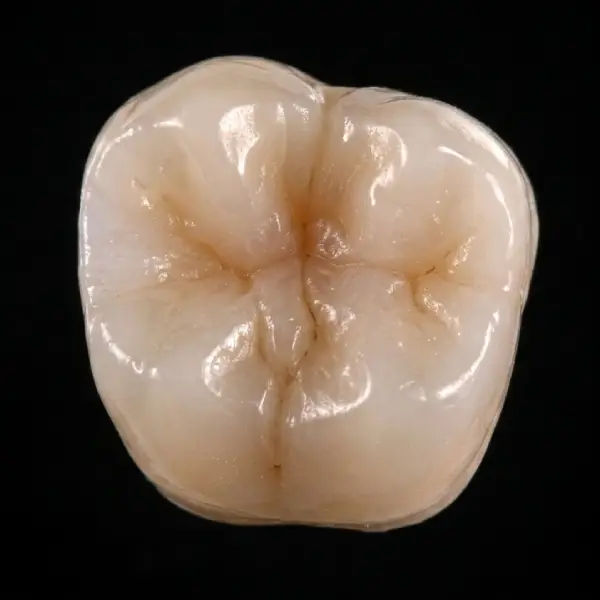
Clinical & Technical Information
Most of the time, a Composite Inlay steps in when back teeth need more than a small fix but still call for something gentle on the tooth structure. Instead of removing too much, this method keeps things strong while looking natural. Strength sticks around even under heavy chewing, thanks to its ability to resist wear and take repairs if needed – something that gives it an edge over ceramics now and then. Whether one surface or several need attention, it adapts without fuss. Behind each piece lies digital planning by Bestodental, shaping edges tightly, mimicking real bite patterns, holding up well once placed.
1. Indications
Our Composite Inlays are Suitable For:
- Moderate to large Class I and Class II cavities (MO/DO/MOD)
- Posterior teeth with cuspal weakening requiring cusp coverage or reinforcement
- Replacement of failed or secondary caries under existing restorations
- Large composite fillings where direct restoration shrinkage control is limited
- Teeth requiring minimally invasive indirect restoration instead of full crown preparation
- Endodontically treated posterior teeth requiring structural reinforcement (selected cases)
- Patients requiring repairable and cost-effective alternative to ceramic inlays/onlays
2. Technical Specifications
| Technical Parameter | Specification |
| Material Type | High-performance indirect composite resin (micro/nano-hybrid filled composite) |
| Restoration Type | Indirect Composite Inlay / Onlay |
| Product Variants | Standard Composite Inlay / High-Strength Composite Inlay / Nano Composite Inlay / CAD/CAM Composite Inlay |
| Flexural Strength | Approx. 120–250 MPa (depending on material grade: nano-filled & high-strength versions offer improved resistance) |
| Filler Content | Approx. 60–85% (by weight, material-dependent) |
| Wear Resistance | Good to excellent after polishing; enhanced in nano and high-strength formulations |
| Marginal Adaptation | High precision via CAD/CAM digital milling and laboratory finishing |
| Polymerization Type | High-pressure, high-temperature polymerized composite block (for CAD/CAM versions) or laboratory cured composite |
| Veneer/Inlay Thickness | Approx. 1.0–2.5 mm depending on cavity design and occlusal load |
| Shade System | VITA Classical shade system compatible |
| Translucency Options | Standard / High translucency / Enamel-like esthetic layering options |
| CAD/CAM Compatibility | STL, 3Shape, exocad compatible workflows |
| Bonding Protocol | Resin cement adhesive bonding (etching + silane + bonding agent protocol recommended) |
| Repairability | Excellent intraoral repair with composite resin |
| Case Turnaround Time | 2–4 days depending on design complexity and digital workflow |
3. Aesthetics
Aesthetics of the Composite Inlay
1) Natural Tooth-Colored Appearance
With their shade matching nearby enamel, composite inlays merge smoothly into place. A subtle fix emerges where color flows uninterrupted across the smile line.
2) Mix of Natural Teeth and Restorations
Starting off seamlessly, the substance blends right into both the repair work and the original tooth. Ending with subtle harmony, it matches the surrounding area without standing out.
3) Metal-Free Esthetic Result
With composite inlays, the look stays natural since they blend in, while metal ones show a noticeable hue. Appearance matters during dental work – these match teeth closely instead of standing out.
4) Balanced Design and Purpose
Composite inlays combine better esthetics with predictable function, making them suitable for conservative posterior restorations.
Order FAQs
1. What information is required to submit a Composite Inlay case?
Start off by sharing the patient’s full name alongside the affected tooth numbers. Include details about the cavity classification – whether it’s Class I or II. Send along the STL scan data when possible. Bite registration records help too. Choose a shade guide match carefully. Specific needs related to function or how teeth come together should be mentioned clearly. For tricky back-tooth situations, extra pictures of the mouth add useful context.
2. Do you accept digital impressions and which systems are compatible?
Right. Digital setups work without issue here. Files from top scanning tools come through clean – whether it’s 3Shape, exocad, or similar STL sources. Whatever your system uses, if it speaks standard STL, we can handle it just fine.
3. What is the typical turnaround time for Composite Inlays?
Most orders wrap up in about two to four workdays once the design gets the green light. When things like cusp coverage or several units come into play, expect a bit more time on the clock.
4. Can I choose different material grades within Composite Inlay options?
Right. Pick Standard, High-Strength, Nano Composite, or CAD/CAM Composite – choice hinges on how much stress the restoration will face, appearance needs, along with what fits your financial plan.
5. How do you ensure occlusal accuracy and contact points?
Every restoration begins as a digital model shaped by how teeth come together. Instead of relying only on scans, adjustments happen using the bite record supplied. Contacts between neighboring teeth shift when needed, following real-world input from the dentist. Final tweaks respond directly to what the clinician observes. The fit evolves until it matches both data and practical feel.
6. Is shade matching necessary for posterior Composite Inlays?
True, back teeth fixes aren’t as noticeable. Still, sharing VITA shade details helps them blend well – particularly near premolars that show more when smiling. Matching tones matters even where it seems less obvious at first glance.