|
|
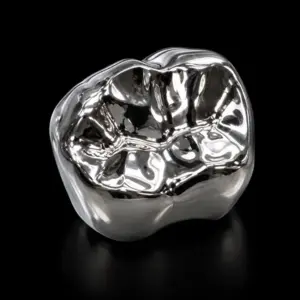
IPS e.max CAD OnlayBestoDental IPS e.max CAD onlay is made of lithium disilicate ceramic and provides a partial coverage restoration to restore damaged tooth structure and protect healthy tooth structure when applicable. The fabrication process of this product allows for perfect fit with proper occlusion and tooth-colored appearance.
|
|
|
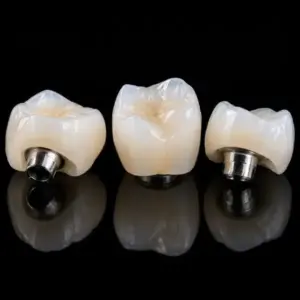
IPS e.max Press OnlayOur IPS e.max Press onlay is a lithium disilicate partial coverage restoration designed for specific posterior restorations where a custom fit, functional anatomy and esthetic integration is required. The press fabrication technique can be used to recreate individual contours and occlusal morphology as per the prescription.
|
E.max Onlay
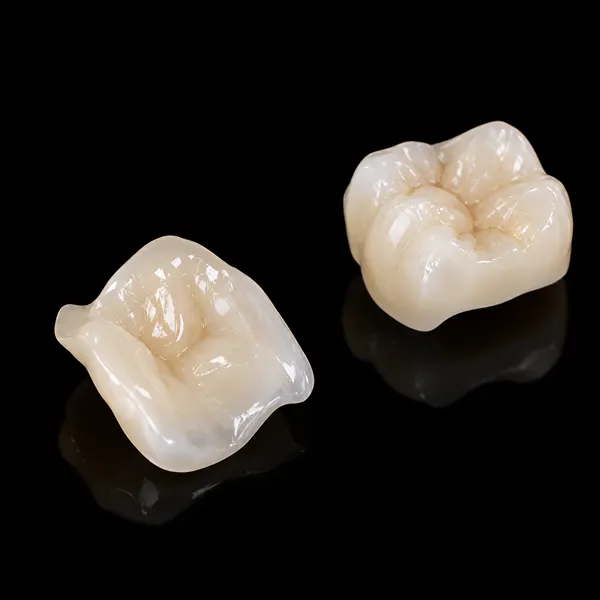
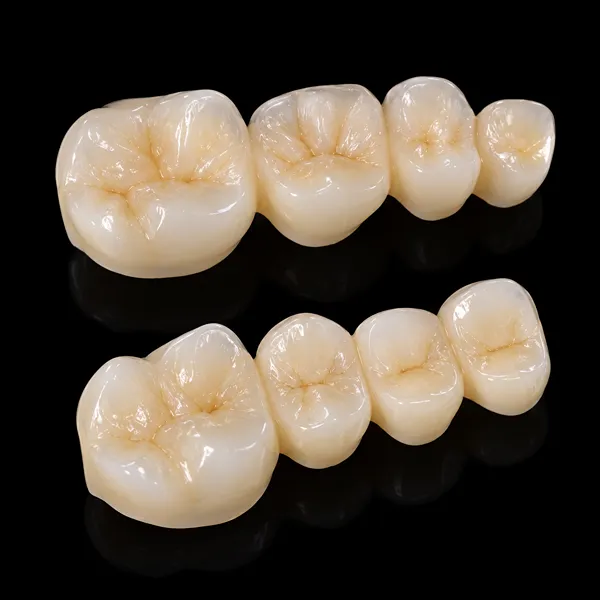
E.max Onlay
Our E.max onlay restorations provide lithium disilicate partial-coverage options for selected posterior cases requiring customized cuspal, occlusal and proximal anatomy. BestoDental provides IPS e.max CAD and IPS e.max Press onlay designs to meet the diverse fabrication workflow and restorative needs.
- IPS e.max CAD and IPS e.max Press onlay options
- Partial-coverage designs for selected posterior restorations
- Customized shade, cusp morphology, occlusal anatomy and proximal contours
- Tooth-colored lithium disilicate restorations designed for functional and aesthetic integration
Categories E.max, Fixed Restoration
Clinical & Technical Information
E.max onlay is a lithium disilicate partial-coverage restorative option for selected teeth with damaged or weakened cuspal and occlusal structures. BestoDental provides IPS e.max CAD and IPS e.max Press onlay options to accommodate different fabrication workflows, restoration designs and clinical requirements.
1. Indications
Our E.max onlay restorations are suitable for:
- Selected posterior teeth requiring partial-coverage restoration
- Teeth with damaged or weakened occlusal structures where an onlay design is appropriate
- Cases requiring customized cusp and occlusal anatomy
- Cases where preservation of suitable remaining tooth structure is desired
- Restorations requiring tooth-colored lithium disilicate aesthetics
2. Technical Specifications
| Technical Parameter | Specification |
| Material | Lithium Disilicate |
| Restoration Type | Partial-Coverage Onlay |
| Available Fabrication | IPS e.max CAD and IPS e.max Press |
| Primary Application | Selected Posterior Restorations |
| Cusp Coverage | Customized According to Preparation Design |
| Occlusal Anatomy | Customized |
| Proximal Contacts | Customized According to Case Requirements |
| Shade | Customized According to Prescription |
| Surface Finish | Customized According to Restoration Design |
3. Aesthetics
Aesthetics for our E.max onlay restorations focus on coordinating shade, morphology and surface anatomy with the remaining natural tooth structure.
1) Tooth-Colored Lithium Disilicate
Lithium disilicate creates a natural look and may be used in partial coverage situations in which there is a need to bond with natural tooth structure.
2) Shade Coordination
The shade can be selected according to the prescription and coordinated with the remaining tooth structure and adjacent dentition.
3) Occlusal Morphology
Cusps, fossae, grooves and other occlusal features can be customized to correspond with the prepared tooth and required restoration design.
4) Proximal Contours
Proximal contours and contact areas can be individually designed to support appropriate integration with the adjacent teeth.
5) Surface Characterization
The surface texture, anatomy and finishing can be tailored to achieve a natural transition between the E.max onlay and existing tooth structure.
Order FAQs
1. What is the difference between IPS e.max CAD Onlay and IPS e.max Press Onlay?
IPS e.max CAD Onlay is created using a CAD/CAM process and IPS e.max Press Onlay is made in a pressed ceramic process. They are both lithium disilicates onlay choices with customized anatomy and aesthetics.
2. Where are E.max onlays commonly used?
E.max onlays are commonly used for selected posterior restorations involving damaged or weakened occlusal and cuspal structures where a partial-coverage design is appropriate.
3. Can the E.max onlay cover one or more cusps?
Yes. The onlay design can be customized according to the preparation and the required extent of cuspal coverage specified in the prescription.
4. Can the occlusal anatomy of an E.max onlay be customized?
Yes. Cusp form, fossae, grooves, occlusal contours and other anatomical features can be customized according to the case requirements.
5. Can the shade of an E.max onlay be customized?
Yes. Shade selection can be provided according to the prescription and the desired relationship with the remaining tooth structure and adjacent teeth.
6. What is required to order an E.max onlay?
The prescription should include the tooth number, restoration type, preferred fabrication option and shade requirements. Preparation information and additional design instructions can also be provided when applicable.