|
|
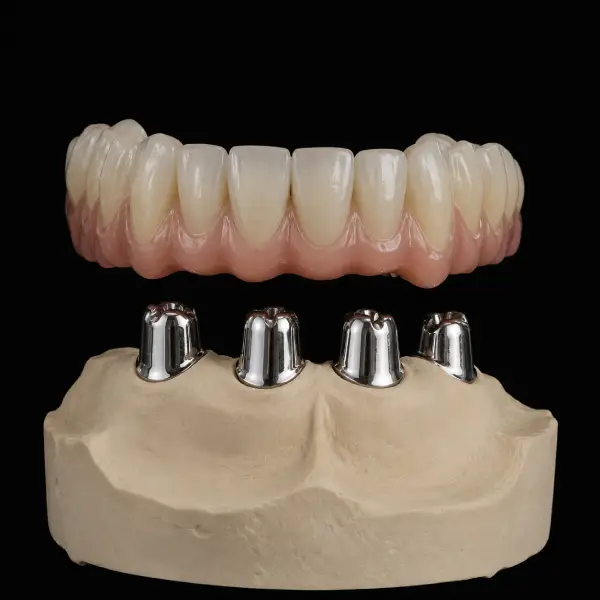
Conical (Konus) Cobalt-Chrome Telescopic CrownsOur Conical Cobalt Chrome Telescopic Crowns provide smooth sliding and strong hold. Not flat but cone shaped, they fit snug over supporting teeth. Made from cobalt-chrome, the material resists wear while staying firm in place. Precision matters here – each piece aligns closely for lasting performance. Movement happens without looseness thanks to tapered contact. Stability continues even after repeated removal and reinsertion. Shape drives grip, not glue or cement. Function stays steady under daily stress. Metal choice supports durability where forces build up. The system works quietly within full denture setups.
|
|
|
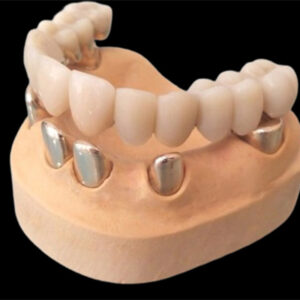
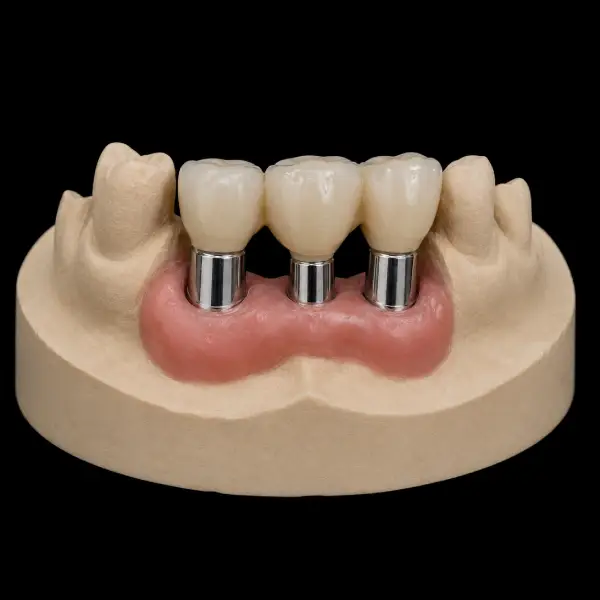
Cylindrical Cobalt-Chrome Telescopic CrownsOur Cylindrical Cobalt Chrome Telescopic Crowns rely on parallel walls for smooth, predictable placement. Stability shows up clearly during use, thanks to even retention pressure. Built tough, they hold up well under heavy mechanical demands. Precision guides every detail, especially where long-term fit matters most. Durable by design, their shape supports repeated removal without wear. Performance stays steady over time, part of how function shapes form here.
|
|
|
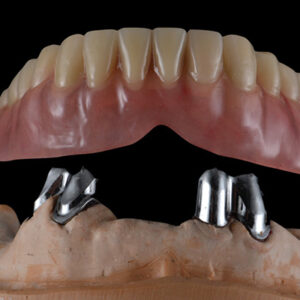
Resilient Cobalt-Chrome Telescopic CrownsOur Resilient Cobalt Chrome Telescopic Crowns handle tiny shifts without strain, so pressure spreads more evenly across neighboring teeth during chewing. Tiny motions matter when replacing several missing units in a row – this design eases tension where it counts. Made from cobalt-chrome, they hold up well under daily forces while supporting longer dental bridges.
|
|
|
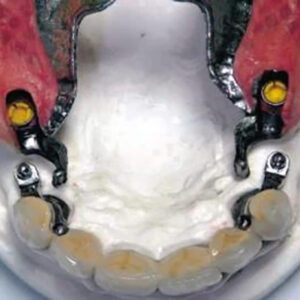
Implant-Assisted Cobalt-Chrome Telescopic CrownsOur Implant-Assisted Cobalt-Chrome Telescopic Crowns are designed for hybrid support systems combining natural teeth and implants, providing enhanced stability, load sharing, and improved retention performance in removable prosthetic restorations.
|
|
|
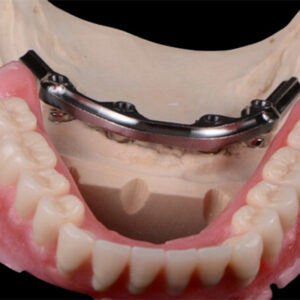
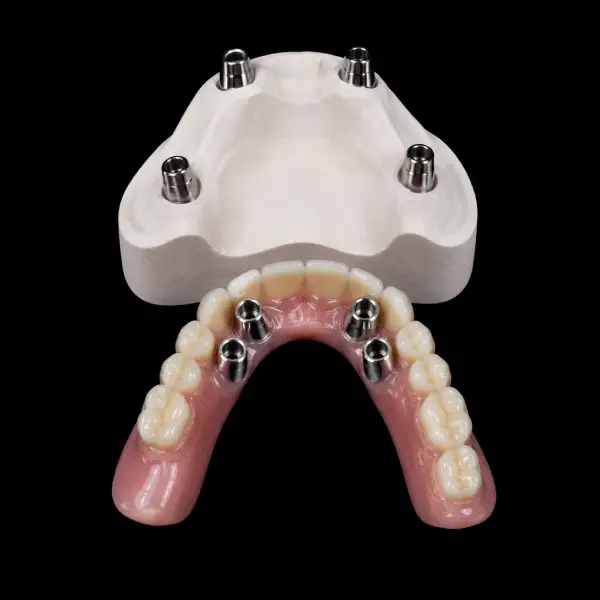
Implant-Supported Cobalt-Chrome Telescopic CrownsOur Implant Supported Cobalt Chrome Telescopic Crowns use cobalt-chrome to support dental implants, built tough for lasting performance. Rigidity matters here – these pieces hold their shape under pressure while snapping into place accurately every time. When precision counts during fitting, these components respond well thanks to tight engineering tolerances. Clinical situations that push materials? These handles them without compromise over months or years of real-world wear.
|
Cobalt-chrome Telescopic Crowns
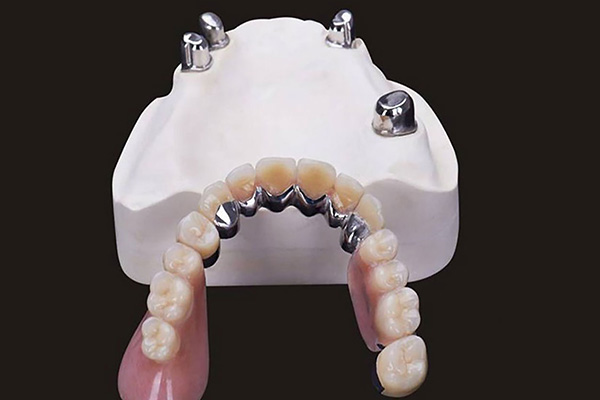
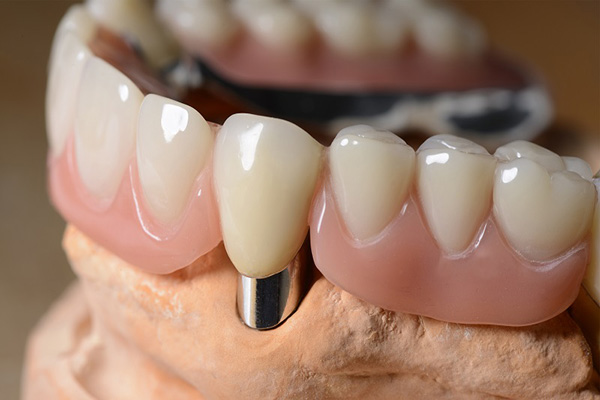
Cobalt-chrome Telescopic Crowns
Bestodental cobalt-chrome telescopic crowns are constructed from high-quality bonded cobalt-chrome alloy materials, which are comfortable to wear and extremely dependable in the long term for patients.
- Excellent cost-effectiveness, thus an ideal choice for cost–saving treatments.
- Strong retention and grip, reducing the risk of dislodgement.
- Resistant to high bite forces due to high strength and durability.
- Cobalt-chrome alloys offer a more affordable alternative to costly materials such as gold.
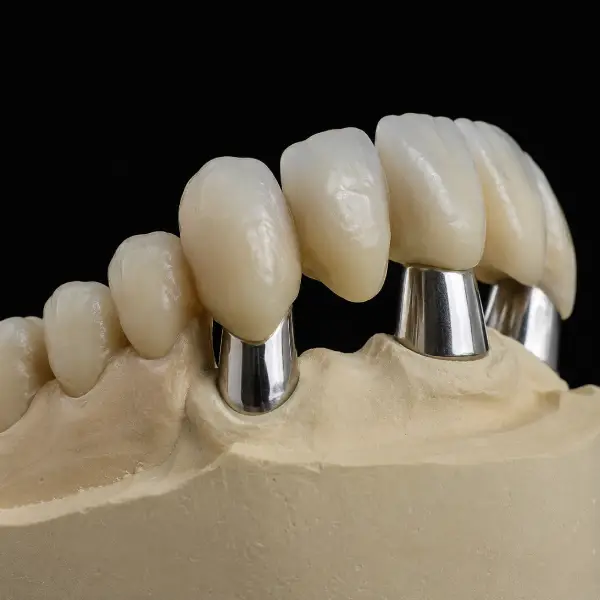
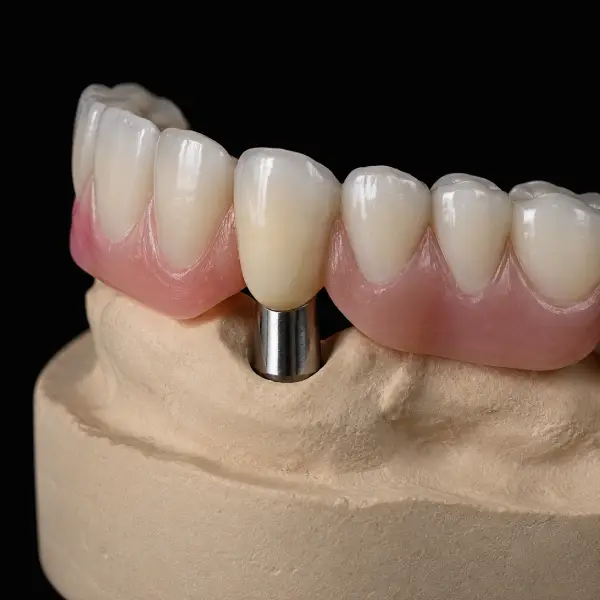
Clinical & Technical Information
Tiny crowns made of strong metal fit inside each other, built to last using a tough cobalt-chromium mix. These pieces hold dental work firmly without shifting too much or wearing down fast. One sits on the tooth, another connects to the denture, working together smoothly over time. Built for heavy chewing demands, they handle stress better than many alternatives. Precision matters here – even small flaws affect how well they grip. Many dentists choose them when patients need reliable support from remaining teeth or implants. Their stability stands out in complex mouth reconstructions where movement must stay minimal. Long term performance makes them common in cases missing several back teeth. Friction stays consistent, neither slipping nor sticking too hard after repeated use. BestoDental’s version fits tightly into modern frameworks needing dependable anchoring strength.
1. Indications
Our Cobalt-Chrome Telescopic Crown systems are Suitable For:
- Partially edentulous patients requiring high-retention removable prostheses
- Kennedy Class I & II cases with distal extension bases
- Multiple abutment teeth requiring splinting and load distribution
- Long-span posterior or full-arch telescopic restorations
- Patients requiring cost-effective alternative to gold or zirconia telescopic systems
- Periodontally compromised but stabilized dentition requiring reinforcement and stabilization
- Implant-assisted telescopic restorations combining natural teeth and implants
- Implant-supported telescopic restorations in fully edentulous or near-edentulous cases
- Cases requiring high rigidity and predictable mechanical retention under functional load
2. Technical Specifications
| Technical Parameter | Specification |
| Material Type | Cobalt-Chromium alloy (Co-Cr dental alloy) |
| Product Variants | Conical (Konus) Cobalt-Chrome Telescopic Crowns / Cylindrical Cobalt-Chrome Telescopic Crowns / Resilient Cobalt-Chrome Telescopic Crowns / Implant-Assisted Cobalt-Chrome Telescopic Crowns / Implant-Supported Cobalt-Chrome Telescopic Crowns |
| Restoration Type | Double-crown telescopic crown system (primary coping + secondary crown) |
| Manufacturing Method | CAD/CAM milling or precision casting depending on case design and clinical requirements |
| Retention Mechanism | Friction-fit between primary crown and secondary crown via taper angle or parallel wall design |
| Design Types | Conical (friction taper), Cylindrical (parallel wall), Resilient (stress-absorbing), Implant-assisted, Implant-supported |
| Abutment Support | Natural teeth, implant abutments, or combined tooth–implant support |
| Taper Angle (Conical Type) | Typically 2°–6° depending on retention requirements |
| Fit Accuracy | High-precision CAD/CAM fit with controlled frictional tolerance |
| Retention Strength | Adjustable via taper design, surface polishing, and internal micro-adjustments |
| Occlusal Design | Balanced occlusion with distributed axial loading across abutments |
| Structural Rigidity | High rigidity suitable for long-span prostheses and high masticatory load conditions |
| Wear Resistance | Excellent long-term resistance to metal wear and friction degradation |
| Surface Finish | Highly polished internal and external surfaces for optimized friction control and hygiene |
| Parallelism Requirement | Strict parallelism required in cylindrical designs for optimal retention performance |
| Digital Workflow Compatibility | Compatible with STL files, Exocad, 3Shape, and full CAD/CAM telescopic workflows |
| Impression Type | Conventional impressions or digital intraoral scanning supported |
| Adjustment Capability | Retention can be fine-tuned via polishing, internal adjustment, or minor surface refinement |
| Repairability | Moderate; laboratory adjustment required for major fit or structural modifications |
| Case Turnaround Time | 5–10 working days depending on case complexity and number of abutments |
3. Aesthetics
Here are the aesthetics for our Cobalt-Chrome Telescopic Crown systems:
1) Invisible Metal Reinforcement System
The Co-Cr telescopic structure is fully concealed within the prosthesis, providing strong internal reinforcement without affecting external esthetics.
2) Stable Functional Occlusal Esthetics
Rigid framework design ensures long-term occlusal stability and predictable prosthetic positioning under functional loading.
3) Clean Prosthetic Design Without Clasps
Telescopic system eliminates visible clasps, improving overall prosthetic appearance and patient comfort.
4) Engineering-Based Esthetic Stability
Mechanical precision ensures consistent retention and stable prosthetic support, maintaining functional esthetics over time.
Order FAQs
1. Information needed for a cobalt chrome telescopic crown submission?
Start by sharing the patient’s full name. Moving on, describe how the supporting tooth has been shaped. Include which dental arch is involved – upper or lower. Send along digital STL files or physical molds. Don’t skip the record of how upper and lower teeth meet when biting. Finish with clear notes on how both main and inner crowns should be built.
2. Got digital scans?
We can work with those – various setups plug right in.
Right. Files from common dental scanners work here – STLs brought in from tools like 3Shape or Medit, also those pulled out of iTero and exocad. Open digital types fit too, so most outputs slide right into our process.
3. Typical Turnaround Time for Cobalt Chrome Telescopic Crown Cases?
Most orders wrap up in about six to ten workdays once the design gets signed off. When things involve multiple units or implants, expect a longer wait – production just takes more steps then.
4. What are the advantages of cobalt-chrome in telescopic crown systems?
Starting strong, cobalt-chrome stands up well under heavy loads thanks to its toughness. Stiffness comes through clearly, holding shape without bending too much. Instead of wearing down fast, it resists surface damage over time. Because it lasts so long, dentists often pick it for complex dental work where parts slide together. Its overall resilience fits demanding situations quite naturally.
5. Which clinical cases are suitable for Co-Cr telescopic crowns?
Some people who have few teeth left might need extra support when chewing, so these work well. Where the mouth’s demands are tougher, they hold up better than many alternatives. When false teeth must stay firmly in place, yet still come out if needed, they offer reliable performance. Stability matters most in shifting situations – here, they respond without slipping.
6. Can cobalt-chrome telescopic crowns be used for implant-supported cases?
True. When paired with implants, these setups help spread pressure more evenly across entire arch replacements. Stability improves because the support system works together under stress.
7. What records are recommended for telescopic crown cases?
Start off by sending thorough prep scans or molds, then include how the teeth come together when biting. Opposing jaw details matter too – don’t skip those. Design notes should spell out exactly what shape the crown needs. Clarity here avoids confusion later on.