|
|
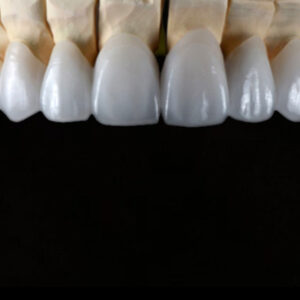
Standard E.max VeneersBestoDental Standard E.max Veneers From start to finish, BestoDental crafts standard E.max veneers built for regular cosmetic fixes – appearance stays sharp without sacrificing durability or real-world performance. Lithium disilicate is at the core, holding color steady case after case while helping results stay dependable when used day in and day out.
|
|
|
High-Translucency E.max VeneersBestoDental High-Translucency E.max Veneers Light moves through these e.max veneers much like it does through natural teeth. Built by BestoDental, they fit quietly into the front areas of a smile. Matching adjacent shades begins with attention to clarity above all else. The way light shifts along the surface shapes their lifelike appearance. Because of this gentle interplay, front teeth gain convincing similarity to organic enamel.
|
|
|
Ultra-Thin E.max VeneersBestoDental Ultra-Thin E.max Veneers Starting thin means less drilling. These BestoDental veneers keep more of your original tooth intact. Strength stays high even when thickness drops low. A tiny layer can look full and last long. Less shaping needed before placement. Appearance improves without heavy removal. The material holds up under daily use. Design focuses on saving what’s already there.
|
|
|
CAD/CAM E.max VeneersOur CAD/CAM E.max Veneers Starting off, the E.max Veneers from our lab take shape through digital design, then move into exact milling for sharp margins and steady appearance. Precision shows up early, carried forward by BestoDental’s use of tech-driven steps that keep results reliable without slowing output down.
|
E.max Veneers
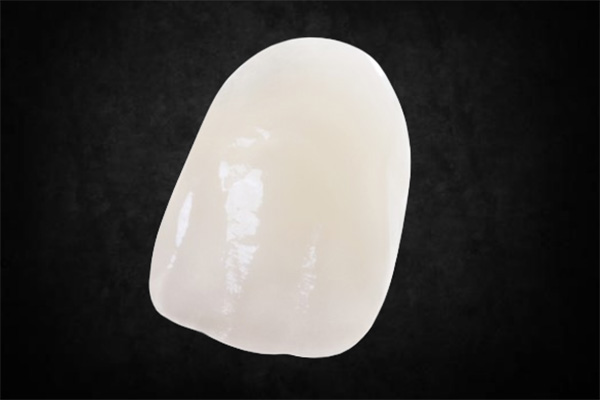
E.max Veneers
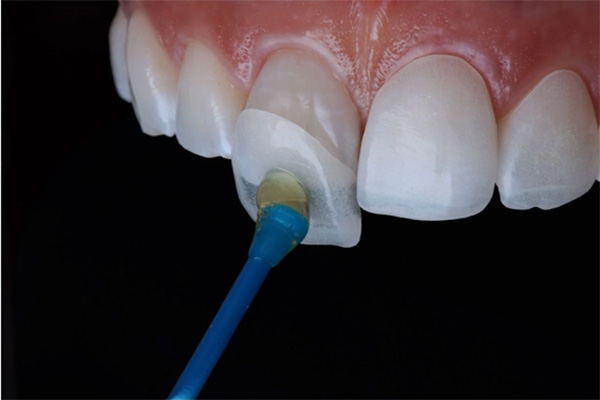
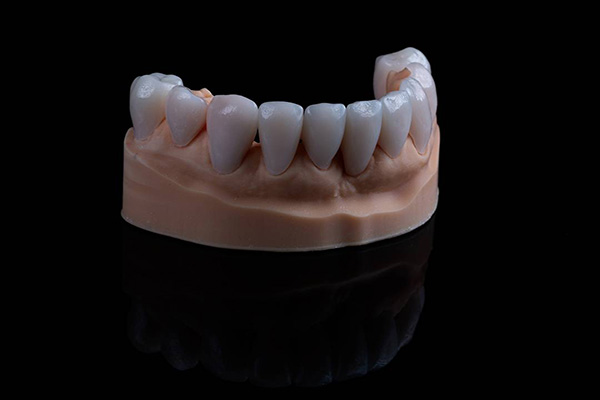
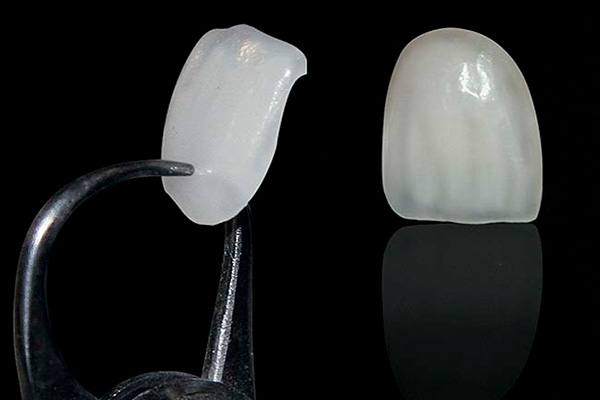
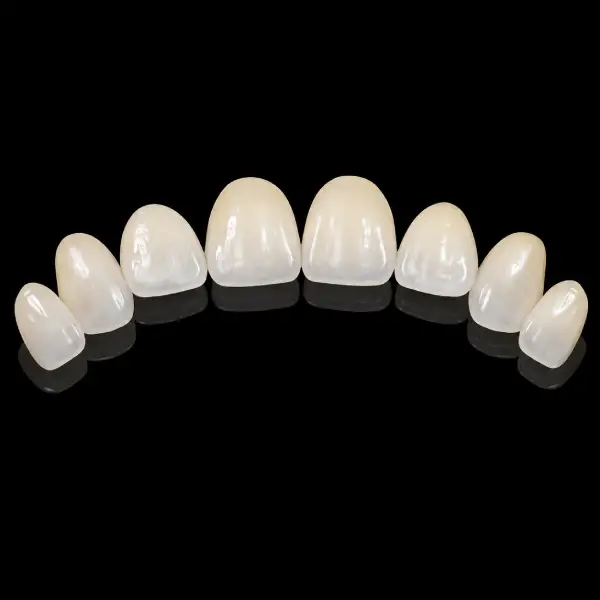
Bestodental provides E.max veneers meticulously hand-designed by our experienced dental technicians to ensure a fully customized and natural-looking result for each case.
- Power that lasts. Toughness built to keep going.
- Looking great matters, much like real teeth do. A smooth match follows naturally.
- Most of the original tooth stays untouched thanks to its extremely slim build.
- Bonding that holds tight means it sticks well to the tooth, so it is less likely to come loose.
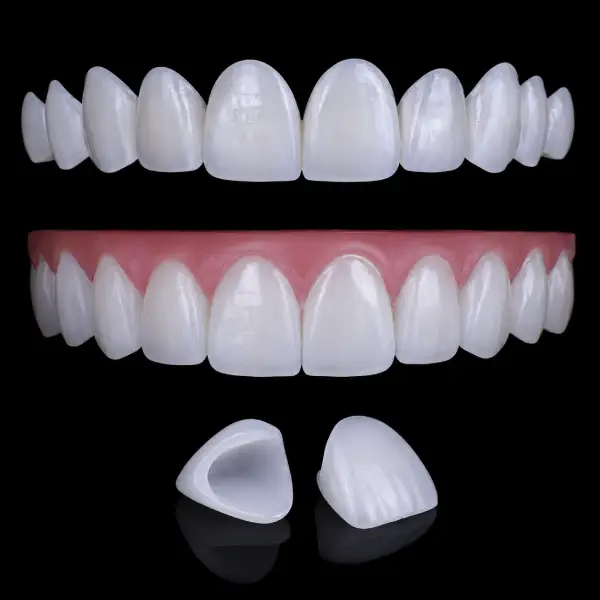
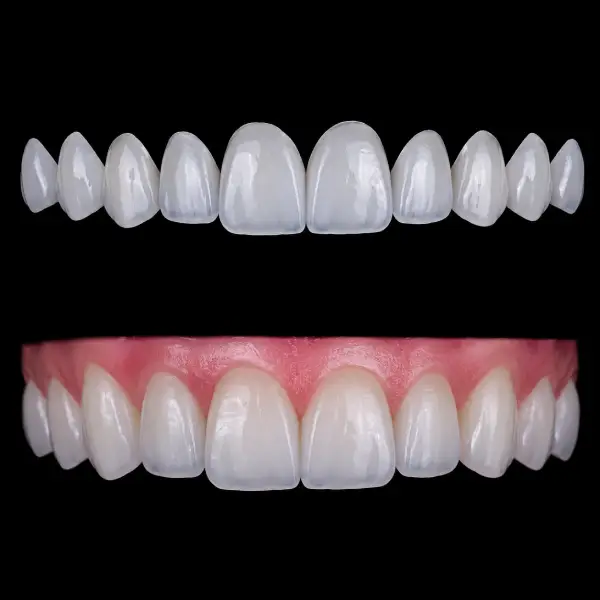
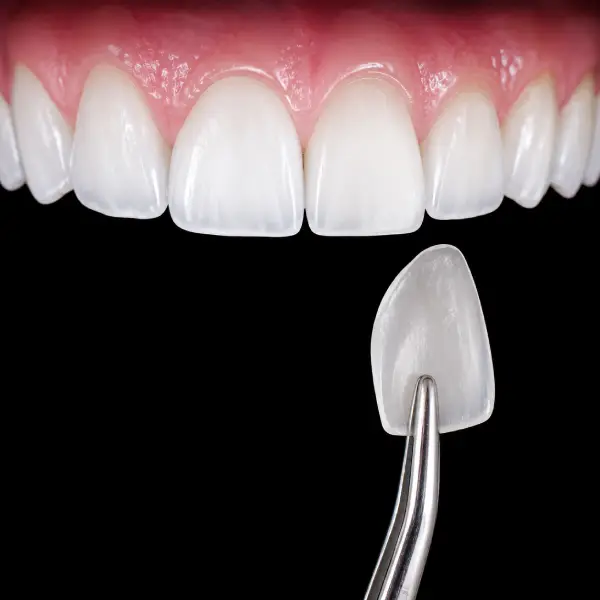
Clinical & Technical Information
The E.max veneers begin with a realistic appearance since they are made from the lithium disilicate glass-ceramic material renowned for its combination of strength and translucency. Even though their appearance mimics the natural one, E.max veneers need little alteration of the existing teeth. As opposed to the traditional feldspathic veneers, they withstand daily use while maintaining their appearance. The process of making E.max veneers begins with designing them with the aid of computer technology, which is followed by hand finishing.
1. Indications
Our E.max Veneers are Suitable For:
- Discolored or severely stained anterior teeth that cannot be improved with whitening
- Chipped, fractured, or worn anterior teeth
- Minor spacing issues and small diastema closure cases
- Uneven tooth shape, size, or contour correction
- Mild tooth misalignment where orthodontic treatment is not indicated
- Smile makeover and cosmetic dentistry cases
- Patients seeking highly esthetic restorations with natural translucency
- Cases requiring stronger ceramic veneers than conventional feldspathic porcelain
2. Technical Specifications
| Technical Parameter | Specification |
| Material Type | Lithium Disilicate Glass-Ceramic (E.max) |
| Restoration Type | Anterior Ceramic Veneers |
| Available Options | Standard E.max Veneers / High-Translucency E.max Veneers / Ultra-Thin E.max Veneers / CAD/CAM E.max Veneers |
| Veneer Thickness | Approx. 0.3–0.8 mm depending on preparation design and veneer type |
| Flexural Strength | Approx. 360–500 MPa |
| Translucency Level | Standard / High-Translucency options available for different esthetic requirements |
| Shade Compatibility | VITA Classical & VITA 3D-Master |
| Esthetic Characterization | Individual staining, layering, surface texture, and translucency customization available |
| Marginal Fit Accuracy | High precision through CAD/CAM digital design and manufacturing |
| Manufacturing Technology | Heat-Pressed E.max or CAD/CAM Milled E.max |
| Digital Compatibility | STL, 3Shape, exocad compatible files |
| Cementation Protocol | Adhesive resin bonding with etching and silanization protocol |
| Indicated Location | Anterior teeth and esthetic zone restorations |
| Case in Lab Time | 3–5 working days (digital cases may be completed faster) |
3. Aesthetics
What makes E.max Veneers look so good? They mimic real tooth enamel nearly perfectly. Strength isn’t an issue either – these hold up well over time. Their shade stays true, resisting discoloration for years. Beauty meets durability here, quietly. Not flashy, just reliable.
1) Natural Translucency and Depth
From within, these materials glow like real teeth do. Light slips through them almost the way it does in enamel. Depth appears genuine, not flat. Vitality comes across without effort. The result looks alive because it mimics nature so closely.
2) Superior Shade Matching
Matching nearby teeth closely becomes possible with many VITA options in color and see-through quality. Results look right because the fit feels natural, thanks to careful shade selection. Each choice adapts quietly to real tooth tones instead of standing apart. Clarity levels shift subtly, just like organic enamel does under light. Customization happens without force, allowing blends that mimic everyday variation.
3) Individual Characterization
A single veneer takes on a unique look through textured surfaces, tiny ridges at the edge, light-filtering tips, yet soft color variations that mimic real teeth. Custom touches shape how light plays across it, while slight imperfections give depth – each one built to blend, not stand out.
4) Consistent Smile Design Results
Starting off, digital tools shape smiles by keeping each tooth even and balanced. One way this happens is through precise computer modeling that guides how layers fit together. Sometimes a small shift matters, so measurements lock in the right curves every time. Another part of it involves machines crafting pieces exactly as planned. Through all steps, matching shapes stay intact without drifting apart.
Order FAQs
1. What information is required to submit an E.max Veneer case?
Provide the patient’s full name and affected tooth numbers. Include shade information through notes or visual references. Send STL files for digital scans or traditional impressions when applicable. Clearly note design preferences to avoid misunderstandings. For highly esthetic cases, include clear smile photos. Smile mockups or reference images are also helpful.
2. What color ranges can you work with?
We support VITA Classical, VITA 3D-Master, and custom shade matching. Clinics can provide photos, shade tabs, or color charts. Whether using standard guides or personalized references, we can match shades according to the dentist’s preferred method.
3. Got a digital scan you’d like us to look at? We can work with that file if needed. Just send it through whenever ready.
Yes. We accept STL files and digital cases from major CAD/CAM systems, including 3Shape, exocad, iTero, Medit, and other open-platform solutions.
4. How long does it usually take?
Most E.max Veneer cases are completed within 3–5 working days after approval. Full smile makeovers may require additional time for customized contouring and shade verification.
5. For top cosmetic veneer results, snap shots of your full smile. Include close-ups showing tooth alignment from various views. Capture each side profile under natural light. Get a photo with retraction so details are clear. Show how teeth look when lips rest naturally. Add images highlighting problem zones needing correction.
Provide a clear full-face photo whenever possible. Include smiling photos, intraoral images from multiple angles, and close-ups of the front teeth. A shade guide photographed beside the teeth under natural light can improve shade matching accuracy.
6. Can multiple veneers be matched for a full smile makeover?
Yes. For multiple veneers, we coordinate shade, translucency, shape, length, and surface texture to create a balanced, natural-looking smile with seamless transitions between teeth.
7. Can you match the veneers to adjacent natural teeth?
Yes. By evaluating shade information, photos, and surrounding tooth characteristics, we can achieve a natural blend with adjacent teeth.
8. What steps help achieve precise fit along with proper margin alignment?
Each E.max Veneer is digitally designed before final refinement. This process ensures accurate margins, proper contacts, and a precise fit, helping the restoration seat smoothly at delivery.